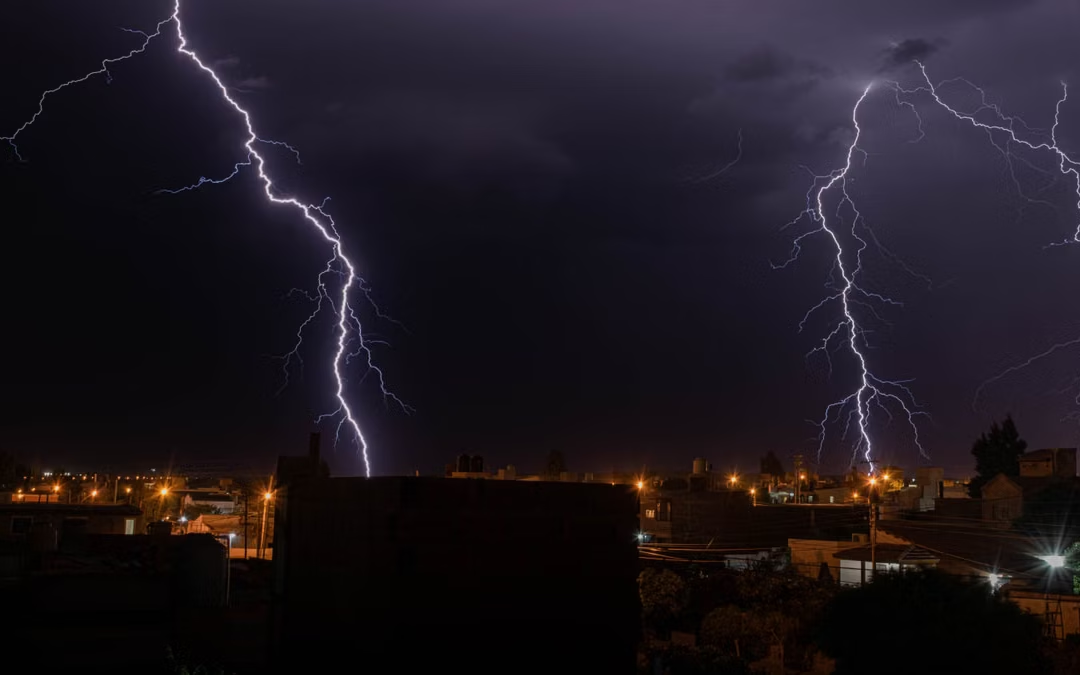
Surge Protection · Hamilton, ON
Power Surge Damage to Appliances
Most people assume the utility pays for this. Alectra's own damage claims page says otherwise, in about one sentence.

 WSIB compliant · 30+ years · ECRA/ESA 7009372
Quick answer
Alectra Utilities states that barring gross or intentional fault, it offers no compensation for damage to a device or appliance, and it lists voltage variations among the events it cannot be held liable for. It tells customers directly that protecting your equipment against a power surge is your responsibility. Claim on your own home insurance, and fit protection before the next one.
A power surge takes out a television, a furnace board and a microwave in the same second, and the first question is always the same. Who pays for this? The answer is on the utility's own website, and almost nobody has read it.
Apollo Electric Inc. fits surge protection across Hamilton and the surrounding area under ECRA/ESA licence 7009372. This page covers what the utility will and will not cover, which claim route actually returns your money, and what genuinely protects equipment.
What a Power Surge Actually Is
A power surge is a spike in voltage above what the circuit is meant to carry. It lasts a tiny fraction of a second. Electronics are built to tolerate a normal range, and anything well outside it cooks the components that were not designed to see it.
The mental picture most people have is lightning, and lightning does cause the dramatic cases. It is not the common one. The ordinary sources are closer to home:
- Utility switching, where the grid reroutes itself and voltage jumps briefly on the way through.
- Power coming back after an outage, which is why equipment often dies at restoration rather than at the moment the lights went out.
- Large motors in your own house cycling off, such as a furnace blower, an air conditioner or a well pump. A power surge from inside the building is extremely common.
- A damaged service conductor or a failing neutral, which can push voltage well above normal on part of the panel.
That last one matters. If a power surge keeps happening, or if lights brighten and dim as appliances cycle, the cause may be a fault in your own service rather than anything the weather did. That is a diagnosis, not a protection problem, and our page on flickering lights covers the patterns.

Will Alectra Pay for the Damage?
Almost certainly not, and the utility says so plainly. Alectra Utilities, the distributor for Hamilton, states on its damage claims page that barring gross or intentional fault, it offers no compensation for damage to a device or appliance. It lists meteorological events and variations in voltage or frequency among the situations where it cannot be held liable.
Its instruction to customers is direct. On voltage problems it says it is up to you to protect your electrical installation and electronic appliances against such events.
Read that again, because it reframes the whole question. The distributor is not promising clean power and compensating you when it fails to deliver. It is telling you the protection is yours to install. A power surge is treated as a known condition of the grid, not a defect.
You can still file. The form goes to the claims department with receipts, photographs and supporting documents, and Alectra's insurer typically takes 60 to 90 days to review it. Keep the damaged items until there is a decision, because you will be asked to produce them, and expect to carry the replacement cost yourself in the meantime.
Even a Successful Claim Pays Less Than You Think
Suppose the rare thing happens and the utility is found negligent. You are not paid what a new one costs. You are paid the lesser of the repair cost or the depreciated value of a comparable item.
Alectra's own worked example is a refrigerator that cost a thousand dollars and was four years old. The likely payment is around six hundred. That is the mechanism, applied to every item on your list.
So the realistic range of outcomes after a power surge runs from nothing at all, which is the usual result, up to a depreciated fraction in the uncommon case where negligence is established. Neither one replaces the equipment.
Your Own Insurer Is Usually the Better Route
Here is the part worth acting on, and it comes from the utility itself. Alectra recommends contacting your insurance agent or broker to find out whether you are covered, and it notes that insurers typically pay full replacement value and may reimburse losses that did not result from Alectra's negligence.
That is a meaningful difference. Your insurer can pay replacement value where the utility pays depreciated value, and your insurer does not require anyone to have been negligent. For most households the home policy is the faster and larger recovery after a power surge.
Two things to check on your own policy before you need them. Whether damage from a power surge is covered at all, since treatment varies between insurers and between policy forms. And what your deductible is, because a single destroyed television may sit under it while a whole-house event will not.
Document everything on the day. Photograph each damaged item in place, keep the receipts you still have, and write down the date and time. Both routes ask for the same evidence and it is far easier to collect before anything is thrown out.
What Actually Prevents the Damage
Protection against a power surge works in layers, because no single device handles everything. The standard approach puts a large device where the power enters and smaller ones at the equipment you care about.
| Layer | Where it goes | What it handles |
|---|---|---|
| Service entrance or panel device | At or beside the main panel, installed by a licensed electrician | A large power surge arriving from outside, including switching and restoration spikes |
| Point of use protector | At the equipment, plugged in | What gets past the first layer, plus a power surge generated inside the house |
| Dedicated protection | Furnace, heat pump, well pump, EV charger | Expensive control boards that a plug-in strip cannot reach |
One correction worth making, because the internet is full of it. Whole home surge protection is not a requirement of the Ontario Electrical Safety Code. The mandate people quote online is article 230.67 of the National Electrical Code, which is American and has no force here. Published summaries of the OESC 29th Edition changes do not include a surge protection mandate for dwelling services. Fitting one is a sound choice, not an obligation, and anyone telling you the Code requires it is quoting the wrong country.
There is a second condition that matters more than the device you buy. Surge protection diverts excess voltage to ground, so it needs a real bonding conductor to divert it into. In a house with two-prong outlets there is nothing behind the third slot, and a plug-in protector there does nothing at all no matter what its indicator says.

The Power Bar Myth and the Green Light That Lies
Two beliefs cost people more equipment than any storm does, and both show up after every power surge we are called to.
A power bar is not a surge protector. Most multi-outlet strips are exactly that, a strip, with no protective components inside. They add sockets. A genuine protector states a surge rating on the device or the box. If there is no rating printed anywhere, assume there is no protection in it.
The indicator light outlives the protection. The parts that absorb a power surge are sacrificial. They wear down with every event they take, including the small ones nobody notices, and eventually they stop absorbing anything. On many units the light keeps glowing green afterwards, because it is wired to show that power is present rather than that protection remains.
Treat plug-in protectors as consumables. Replace them every few years, and replace one immediately after any power surge that damaged something else in the house, because it very likely spent itself doing its job.
Storms, the Grid and Older Hamilton Services
Hamilton gets the summer storm season and the winter wind events, and both produce outages followed by restoration, which is when a lot of equipment actually dies. Alectra is the distributor across the city, and its outage line runs 24 hours.
If you see a downed wire after a storm, stay back at least 10 metres, keep others back, and call Alectra at 1-833-253-2872. Never assume a line on the ground is dead.
Two local patterns are worth knowing. Houses in the older parts of the city often have ungrounded branch circuits, which means plug-in protection is useless until there is a bond to divert into. And a panel with no space left has nowhere to fit a service entrance device, so surge protection and a panel upgrade often end up being one conversation rather than two.
Frequently Asked Questions
Will Alectra pay for power surge damage to my appliances?
Almost certainly not. Alectra states that barring gross or intentional fault it offers no compensation for damage to a device or appliance, and it lists variations in voltage or frequency among the events it cannot be held liable for. It tells customers that protecting their installation and appliances against such events is their own responsibility.
Does home insurance cover power surge damage?
Often, but it depends on your policy. Alectra itself recommends asking your insurance agent or broker, and notes that insurers typically pay full replacement value and may reimburse losses that did not result from Alectra's negligence. Check whether your policy covers it and what your deductible is before you need to know.
Is whole home surge protection required in Ontario?
No. Published summaries of the Ontario Electrical Safety Code 29th Edition do not include a surge protection mandate for dwelling services. The requirement quoted on many websites is article 230.67 of the American National Electrical Code, which does not apply in Ontario. Installing one is a sound choice rather than a legal obligation.
Does a power bar protect against a power surge?
Usually not. Most multi-outlet strips only add sockets and contain no protective components. A real surge protector states a surge rating on the unit or its packaging. If no rating is printed anywhere, treat it as an extension of your wiring and nothing more.
How often should a surge protector be replaced?
The absorbing components are sacrificial and degrade with every event they take, so treat plug-in units as consumables and replace them every few years. Replace one immediately after any power surge that damaged other equipment. The indicator light often stays lit after protection is gone, because it reports power rather than protection.
Does Apollo Electric install surge protection in Hamilton?
Yes. We assess the panel, confirm whether the circuits you want protected actually have a bonding conductor, and install service entrance protection under ECRA/ESA licence 7009372 with ESA notification. Call 905-921-5487. The line is answered 24 hours a day.
References
- Alectra Utilities, damage claims, on no compensation barring gross or intentional fault, voltage variations, depreciated value, the 60 to 90 day review, and its recommendation to contact your own insurer.
- Alectra Utilities, Conditions of Service, the governing document for the distributor's obligations and limits of liability.
- Alectra Utilities outage reporting, the 24 hour line and the 10 metre stay-back distance for a downed wire.
- Electrical Safety Authority, the Ontario Electrical Safety Code, on the Code in force in Ontario and its current edition.
- Insurance Bureau of Canada, on home insurance coverage and property claims in Canada.
Apollo Electric Inc.
Protection is cheaper than one replacement. The utility has already told you whose job it is.
Apollo Electric Inc., 83 Ferndale Ave, Hamilton, ON L8K 4L7
905-921-5487 · ECRA/ESA 7009372 · WSIB compliant · Answered 24 hours a day