Ungrounded Wiring · Hamilton, ON
Two-Prong Outlets in an Ungrounded House
They are legal. They are not dangerous on their own. The damage starts the day somebody swaps one for a three-prong receptacle with nothing behind the third slot.

 WSIB compliant · 30+ years · ECRA/ESA 7009372
Quick answer
Two-prong outlets mean that circuit has no bonding conductor, and keeping them is legal in Ontario. What is not safe is replacing them with three-prong receptacles, because the outlet then looks grounded while nothing is connected to the third slot. The honest options are to leave the two-prong outlets alone, add GFCI protection for shock safety, or run a real ground.
Two-prong outlets are the most common thing people discover at eleven at night, usually while holding a plug that will not fit. The question that follows is almost always the wrong one. It is not whether the outlet is dangerous. It is what happens if you change it.
Apollo Electric Inc. has worked on ungrounded branch circuits across Hamilton and the surrounding area under ECRA/ESA licence 7009372. This page covers what the slot count tells you, which fixes are real, and why the advice you will find in most search results was written for a different country.
What a Two-Prong Outlet Is Actually Telling You
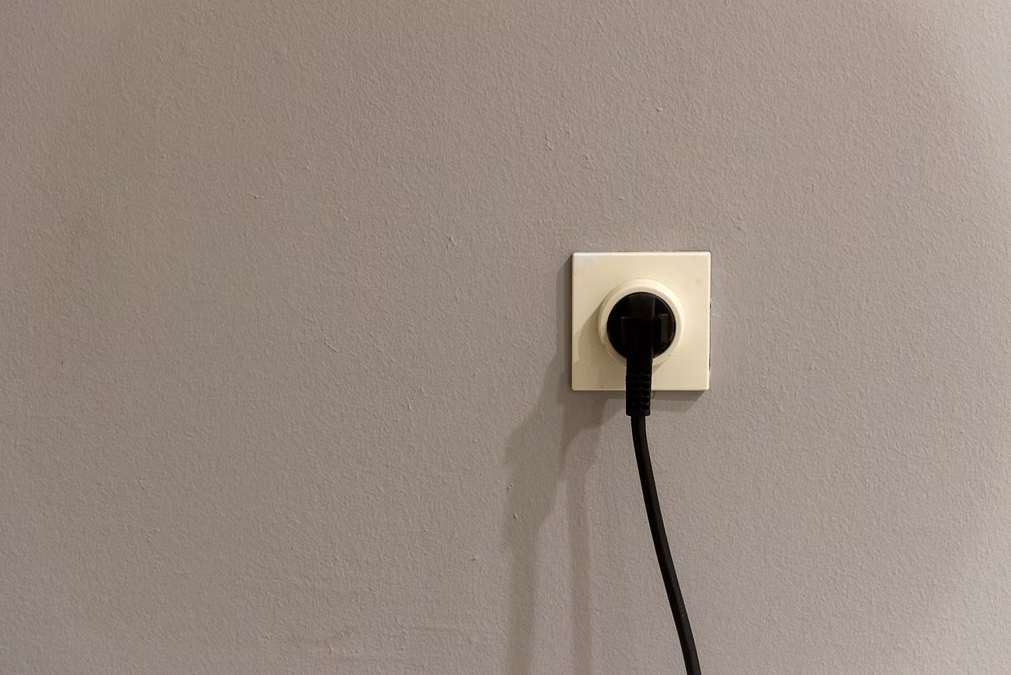
A receptacle has a slot for every conductor behind it. Two slots means two conductors reached that box, a live and a neutral, and nothing else. There is no third wire, so there is no bonding conductor, which is the Canadian term for what most people call the ground.
That is all two-prong outlets tell you. They are a report on the wiring, not a verdict on it. A house full of two-prong outlets can have sound conductors, solid connections and no faults anywhere. It simply predates the era when a bonding conductor was run to every receptacle.
What the bonding conductor does is give fault current a deliberate path back to the panel. If a live conductor inside an appliance touches its metal casing, the bond carries that current away fast enough to open the breaker. Without it, the casing can sit energised and wait for someone to touch it. That is the gap, and it is worth understanding before deciding what to do about it.

Are Two-Prong Outlets Legal in Ontario?
Yes. Existing two-prong outlets are permitted. The Ontario Electrical Safety Code applies to new work and to alterations, and it does not order homeowners to tear out wiring that was compliant when it was installed. Nobody is obliged to rewire a house because the receptacles have two slots.
This matters because the pressure to act rarely comes from the regulator. It comes from an insurer asking questions, a home inspection before a sale, or the simple fact that modern electronics expect a ground. Those are real reasons. They are not the same as being offside the Code, and it helps to know which one you are responding to.
The legal picture changes the moment work begins. Alterations have to meet current requirements, which is why the cheap-looking fix is the one that creates the problem.
The Swap That Causes the Damage
Three-prong receptacles cost very little and fit the same box. Someone notices the plug will not go in, buys a handful, and changes them over an afternoon. The plugs fit afterwards, so the job looks finished.
Nothing was connected to the third slot. There was no third wire to connect. The receptacle now advertises a ground that does not exist, and everything downstream of that assumption is wrong at once:
- A surge protector plugged into it cannot do its job. Surge protection works by diverting excess voltage to ground, so without a bond it has nowhere to send anything, whatever its indicator light claims.
- Appliances with metal casings lose the fault path that was supposed to protect the person holding them.
- A home inspector will find it, and an insurer may treat ungrounded three-prong receptacles as evidence of unpermitted work.
- Nobody who lives there afterwards has any way of knowing. The outlet looks exactly like a grounded one.
This is the single most common thing we are called to undo. Honest two-prong outlets are safer than dishonest three-prong ones, because at least the two-slot receptacle tells the truth about what is behind it.
What GFCI Protection Does, and What It Does Not
A Class A ground fault circuit interrupter compares the current going out against the current coming back. If the two stop matching, meaning current is escaping somewhere it should not be, it opens the circuit in a fraction of a second. It does that whether or not a bonding conductor is present, which is exactly why it comes up in this conversation.
So a GFCI genuinely does add shock protection to a circuit feeding two-prong outlets. That is not marketing. It is the single most effective safety improvement available short of running new wire. A GFCI that trips over and over is a separate problem, covered in our guide to why a GFCI keeps tripping.
Here is the part most articles leave out. A GFCI does not create a ground. It protects people, not equipment. Your surge protector is still useless, your sensitive electronics still have no reference to ground, and the third slot on any receptacle downstream is still connected to nothing. Shock protection and grounding are two different jobs, and only one of them is being done.

The Rule Most Articles Quote Is American
Search this question and you will be told, repeatedly and confidently, that you may replace two-prong outlets with a GFCI receptacle, apply a sticker reading "No Equipment Ground", and consider the matter closed.
That instruction comes from the National Electrical Code, article 406.4(D)(2). The NEC is the American code. It has no legal force in Ontario, and a surprising number of Canadian sites repeat it without noticing where it came from.
Ontario runs on the Ontario Electrical Safety Code, now in its 29th Edition and in force since 1 May 2025. The Electrical Safety Authority's own bulletin on replacements and alterations in a dwelling unit, Bulletin 26-29-6 issued May 2025, takes a different line. Where branch circuit wiring is replaced, it states that receptacles are to go in as grounded three-pin type, tamper resistant and marked as such under Rule 26-706, and that the installation is to meet arc-fault protection under Rule 26-658.
We are not going to tell you the GFCI approach is forbidden on your particular circuit, because that call belongs to the licensed electrician standing in front of your panel applying the OESC to what is actually there. What we will tell you is that it is not the automatic, settled, sticker-and-done answer the search results present, and that copying an American rule into an Ontario house is how people end up with work that fails an inspection later.
Four Real Options, Ranked Honestly
These are the genuine choices for two-prong outlets, from least to most invasive. There is a defensible case for every one of them.
| Option | What it actually achieves | Worth considering when |
|---|---|---|
| Leave them alone | Nothing changes. The wiring stays legal and honest about itself | The circuits test sound and you are not plugging in anything that needs a ground |
| Add GFCI protection | Real shock protection for people. No ground, no equipment protection | Kitchens, bathrooms, basements and anywhere damp, or as a staged first step |
| Run a bond to specific circuits | A true ground where you actually need one | A home office, an entertainment wall, or any circuit running electronics worth protecting |
| Rewire the affected circuits | Grounded, tamper resistant, arc-fault protected, certificate on file | You are renovating anyway, selling, or the conductors themselves test poorly |
Most houses end up with a mix. Rewiring everything at once is rarely necessary and rarely the best use of the money. Targeting the circuits that carry real risk, then leaving the rest as honest two-prong outlets, is usually the better plan.
Whichever route you take for your two-prong outlets, the work has to be done by a Licensed Electrical Contractor and notified to the ESA. That notification is what produces a Certificate of Acceptance, and that certificate is the document an insurer or a buyer's lawyer will ask for.
Older Hamilton Housing and Ungrounded Circuits
Two-prong outlets turn up constantly in the older parts of Hamilton. The pre-war stock around the lower city, the North End and Crown Point was wired long before a bonding conductor at every receptacle was standard, and plenty of it was never fully updated.
Two things show up often enough in that housing to be worth flagging. The first is a house with a modern panel and original branch circuits still feeding two-prong outlets, because a panel upgrade does not add a bonding conductor to wiring that never had one. People assume the new panel fixed it. It did not.
The second is partial work, where one owner grounded the kitchen and nothing else, so the house has grounded and ungrounded circuits mixed together with no record of which is which. Testing sorts that out quickly, and it is worth doing before you decide how much work you are facing.
If the house also has knob and tube or aluminum branch circuits, the conversation widens, and our pages on knob and tube wiring and aluminum wiring cover those separately.
Frequently Asked Questions
Are two-prong outlets legal in Ontario?
Yes. Existing ungrounded receptacles are permitted and there is no requirement to remove them. The Ontario Electrical Safety Code governs new work and alterations, so the obligation to meet current rules is triggered when work is done, not by the age of what is already installed.
Can I just replace two-prong outlets with three-prong ones?
No, not on its own. Fitting a three-prong receptacle where no bonding conductor exists creates an outlet that appears grounded while the third slot connects to nothing. It defeats surge protection, removes the fault path appliances rely on, and leaves no way for anyone afterwards to tell.
Will a GFCI ground my two-prong outlets?
No. A GFCI adds genuine shock protection by detecting current leaving the circuit, and it works without a bonding conductor. It does not create a ground, does not protect equipment, and does not make a surge protector function. Shock protection and grounding are separate jobs.
Do I need to notify the ESA to replace two-prong outlets?
Electrical work in Ontario has to be carried out by a Licensed Electrical Contractor and notified to the Electrical Safety Authority, which is what produces a Certificate of Acceptance. Confirm the scope with your contractor before work starts, since that certificate is what an insurer or a buyer will ask to see.
Can I use a three-prong adapter on two-prong outlets?
An adapter lets the plug fit and nothing more. The ground pin still connects to nothing unless the box itself is bonded and the adapter tab is fastened to a bonded cover screw, which is rarely the case in a house with no bonding conductor. Treat an adapter as a temporary convenience, never as a fix.
Does Apollo Electric work on two-prong outlets in Hamilton?
Yes. We test which circuits actually have a bonding conductor, explain which of the four options fits each one, and carry out the work under ECRA/ESA licence 7009372 with ESA notification. Call 905-921-5487. The line is answered 24 hours a day.
References
- Electrical Safety Authority, Bulletin 26-29-6, electrical replacement and alterations in a dwelling unit, issued May 2025, on grounded three-pin and tamper resistant replacement under Rule 26-706 and arc-fault protection under Rule 26-658.
- Electrical Safety Authority, hiring an electrician or contractor, on why only a Licensed Electrical Contractor may be hired.
- Electrical Safety Authority contractor locator tool, for verifying any ECRA/ESA licence number.
- CSA Group, Canadian Electrical Code Part I, 24th Edition, the standard the Ontario Electrical Safety Code 29th Edition is based on, in force in Ontario since 1 May 2025.
- Alectra Utilities, Hamilton's electricity distributor, its 24 hour line and the 10 metre stay-back distance.
Apollo Electric Inc.
Find out which circuits actually have a ground before you spend anything on the ones that do not.
Apollo Electric Inc., 83 Ferndale Ave, Hamilton, ON L8K 4L7
905-921-5487 · ECRA/ESA 7009372 · WSIB compliant · Answered 24 hours a day