Electrical Troubleshooting · Hamilton, ON
GFCI Keeps Tripping in Hamilton
A GFCI that trips is doing its job. One that trips again and again is pointing at water, a leaky appliance, a worn device or damaged wiring, and the pattern tells you which.
 WSIB compliant · 30+ years · ECRA/ESA 7009372
Quick answer
A GFCI keeps tripping because it senses current leaking to ground, usually from moisture in an outdoor or bathroom receptacle, an appliance with worn insulation, or damaged wiring further down the circuit. Unplug everything and press RESET. If it trips with nothing plugged in, leave it off and call a licensed electrician.
You press RESET, the kitchen counter comes back to life, and ten minutes later it clicks off again. Or the outdoor receptacle dies every time it rains. When a GFCI keeps tripping it is annoying, but it is also the one device in the house built to stop a shock before it hurts someone.
When a GFCI keeps tripping, the device is usually right and something on its circuit is wrong. This guide explains the eight causes we find most often in Hamilton homes. It also covers the safe checks you can do yourself and the point where the receptacle should stay off.
What Does It Mean When a GFCI Keeps Tripping?
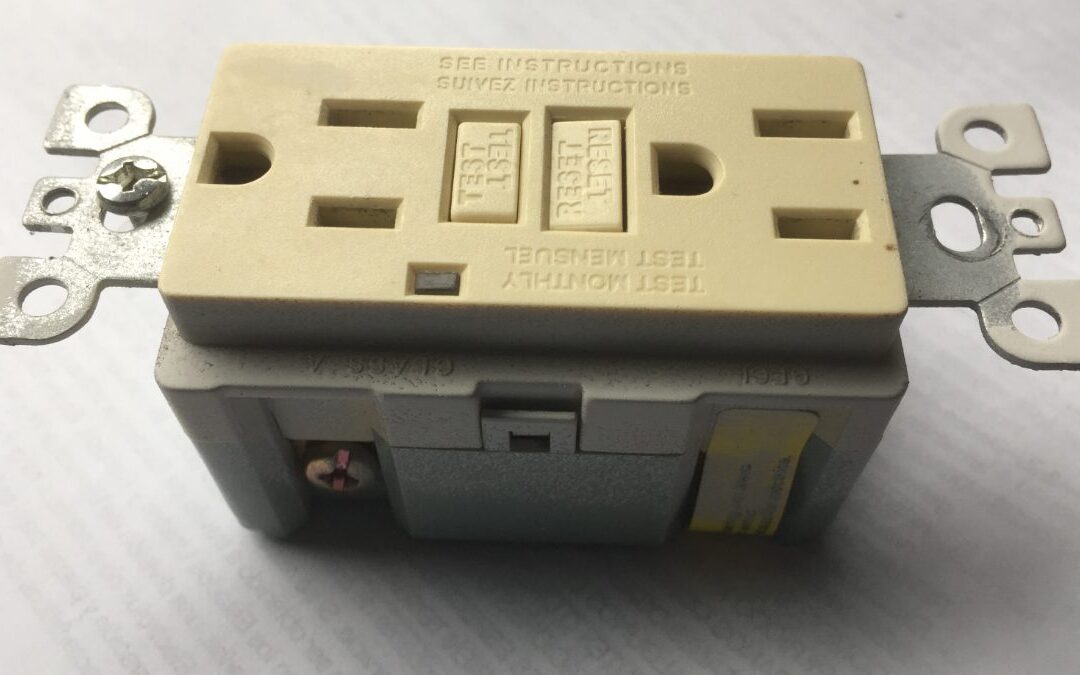
A ground fault circuit interrupter compares the current going out on the hot wire with the current coming back on the neutral. Normally the two are equal. When some of that current escapes through water, a damaged cord or a person, the GFCI sees the difference and cuts the power.
The amount it reacts to is tiny. A Class A GFCI, the type required in Canadian homes, trips at about 4 to 6 milliamps. That is far less than a 15 amp breaker needs to see before it acts. So when a GFCI keeps tripping, it is reacting to leakage, not to a circuit drawing too much power.
- One trip after a storm or a spill. Usually moisture. Dry it out, reset, and watch it.
- Trips only when one appliance runs. The appliance is the likely cause, not the receptacle.
- Trips with nothing plugged in, or will not stay reset. A wiring fault or a failed device. Leave it off and book an electrician.
Is a GFCI Trip the Same as a Breaker Trip?
No. A standard breaker trips on overload or a short circuit, meaning too much current. A GFCI trips on imbalance, meaning current going somewhere it should not. If the switch in your panel is the one that keeps flipping, our guide to a breaker that keeps tripping covers overloads and shorts. Newer homes also have arc fault breakers, which trip for a different reason again.
Leave It Off If You Notice Any of These
Smoke, flame, sparks or a shock from a receptacle? Do not touch it. Shut off the breaker or main only if you can do it safely and dry, then call 911 for fire or injury.
Short of an emergency, if your GFCI keeps tripping and you notice any of these signs, the device is warning you about something real. Leave it tripped until a licensed electrician has looked at the circuit:
- It trips the moment you press RESET, with nothing plugged in
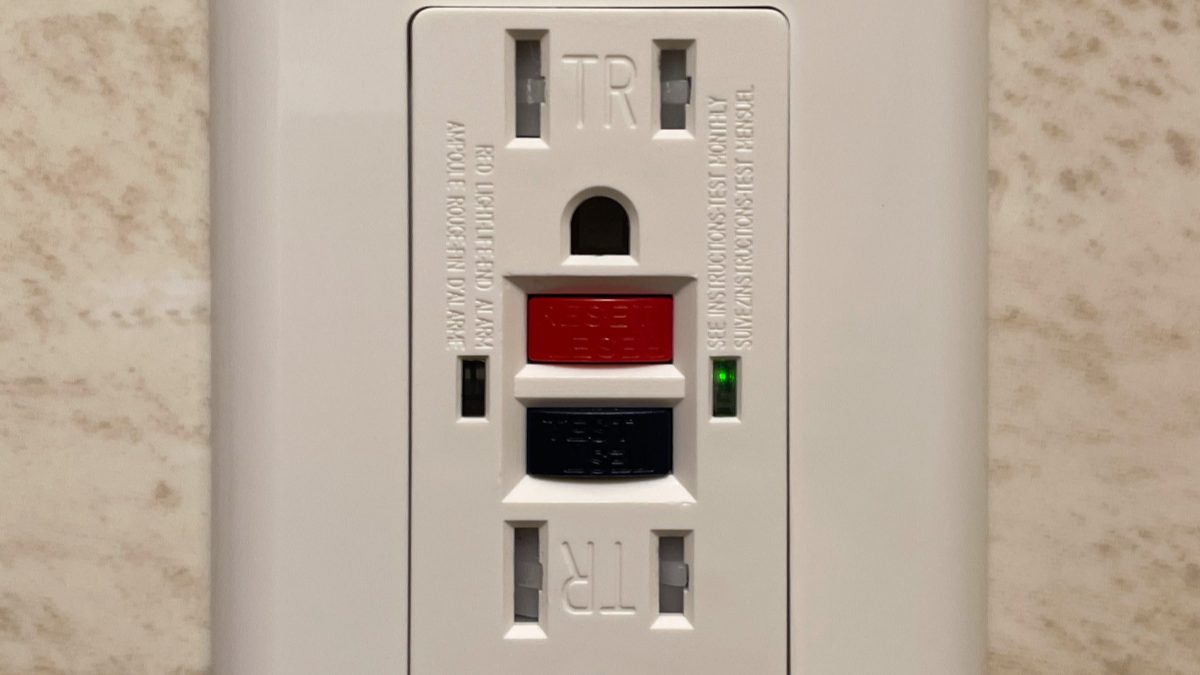
- A red light stays on or flashes and RESET will not clear it
- The receptacle or plate feels warm, looks scorched or smells of hot plastic
- Someone felt a tingle or a shock from an appliance on that circuit
- There is water near the box, from a leak, a flooded basement or a cracked outdoor cover
- It started tripping after a nail, screw or renovation went into that wall
If a GFCI keeps tripping, never replace it with a regular receptacle to stop the trips. That removes the shock protection the code requires and leaves the actual fault in place. Heat and smell at a receptacle are covered in our guide to an outlet burning smell, and visible sparks in our guide to a sparking outlet.
8 Causes, From Harmless to Urgent
Almost every case where a GFCI keeps tripping in Hamilton comes down to one of these eight. The middle column shows what you will notice, and the last column shows how seriously to take it.
| Cause | What you notice | How serious |
|---|---|---|
| 1. Moisture in the box | Trips in rain, snow melt, humid weather or after showers | Moderate. Dry it and fix the cover or seal |
| 2. A leaky appliance | Trips only when one kettle, hair dryer, heater or tool runs | Moderate. Retire or repair the appliance |
| 3. Outdoor cords and decorations | Trips at night or in wet weather with lights or a block heater plugged in | Moderate. Use outdoor rated cords and an in-use cover |
| 4. Motor loads | Trips when a sump pump, freezer or older fridge starts | Moderate to urgent if it is the sump pump |
| 5. A worn GFCI | Random trips, a red status light, or RESET that will not hold | Repair soon. Replace the device |
| 6. Too many outlets downstream | One GFCI feeds a long run of receptacles, often in other rooms | Moderate. Split the protection |
| 7. Damaged wiring on the circuit | Trips with nothing plugged in, often after renovation work | Urgent. Leave it off |
| 8. A wiring error | A shared neutral or crossed connections behind the device | Urgent. Needs an electrician |
The first four causes are about what is plugged in or what is getting wet. The last four are about the device and the wiring, and those are the ones a homeowner cannot fix safely. Leviton, one of the largest GFCI makers, says in its homeowner guide to GFCI trips that persistent tripping can indicate moisture in the wiring, a damaged circuit or other hidden hazards.
Is It the Appliance or the Wiring?
When a GFCI keeps tripping, this is the question that decides whether you can solve the problem yourself. The test is simple: unplug everything on that GFCI and on every outlet it protects, then press RESET.
If it holds with everything unplugged, plug items back in one at a time. When the GFCI keeps tripping on one particular appliance, you have found the cause. Heating elements and motors are the usual suspects, because their insulation breaks down with age and heat.
Why Does My GFCI Trip When Nothing Is Plugged In?
Because the leak is in the wiring or the device itself. Water inside the box, a nicked cable in the wall, a loose ground touching a terminal, or a failed GFCI can all trip it with no load at all. If the GFCI keeps tripping with nothing plugged in anywhere on the circuit, leave it off. That is no longer a nuisance trip.
Why Does It Trip With the Kettle or Hair Dryer?
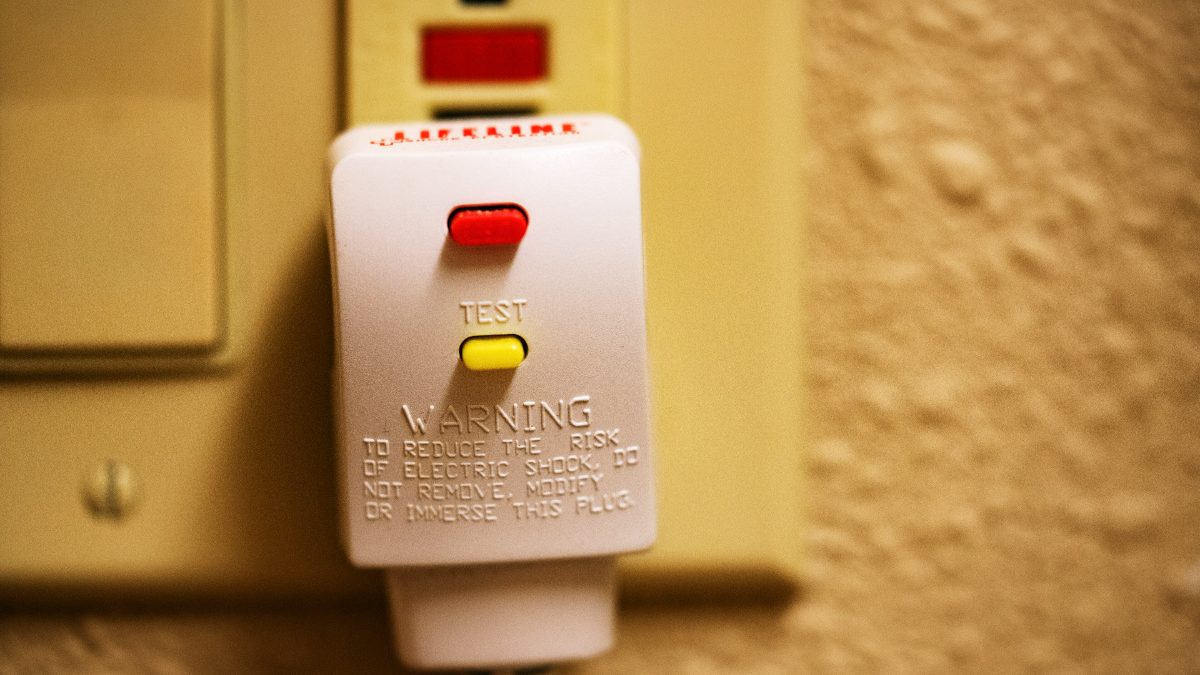
An appliance with a heating element can leak a few milliamps to its metal body as it ages, especially when it is hot or damp. A GFCI notices that leak long before you would feel it. Try the appliance on a different GFCI. If that one trips too, retire or repair the appliance rather than the receptacle. This is the most common reason a GFCI keeps tripping in a kitchen or bathroom.
Outdoor, Bathroom and Basement GFCIs
Location tells you a lot. Most of the GFCIs we are called about in Hamilton sit outside, in a bathroom, beside a kitchen sink, or in an unfinished basement. Each has its own usual cause.
Why Does My Outdoor GFCI Trip When It Rains?
When an outdoor GFCI keeps tripping in the rain, water is getting into the receptacle or into something plugged into it. Cracked covers, flat covers that only seal when closed, and cords left lying in puddles are the usual culprits. Hamilton's freeze and thaw cycles also open up the caulking around exterior boxes over time.
The fix is usually a weatherproof in-use cover that stays sealed with a cord plugged in, plus outdoor rated cords and connections kept off the ground. The Electrical Safety Authority's Bulletin 26-29-6 says a replacement outdoor cover must meet the wet location cover rule, Rule 26-708. It also says a replaced outdoor receptacle must be GFCI protected.
Does a Block Heater Need GFCI Protection in Ontario?
Yes, for outdoor receptacles. ESA's Bulletin 26-18-15 states there is no exemption for block heaters. That matters every January, when a GFCI keeps tripping on a frosty morning because a worn block heater cord has absorbed moisture overnight.
What If the GFCI Feeds My Sump Pump?
If that GFCI keeps tripping, treat every trip as urgent, because a tripped GFCI means a pump that is not running. Sump pumps often share a GFCI in an unfinished basement or near a laundry tub. Do not swap the device for a regular receptacle. Instead, have an electrician find the leak, and consider a battery backup pump or a water alarm until it is fixed.
Why One GFCI Controls Several Outlets
One GFCI can protect every receptacle wired after it on the same circuit. Builders use this to cover a bathroom, a garage and an outdoor receptacle from a single device, and the protected outlets are supposed to carry a small label.
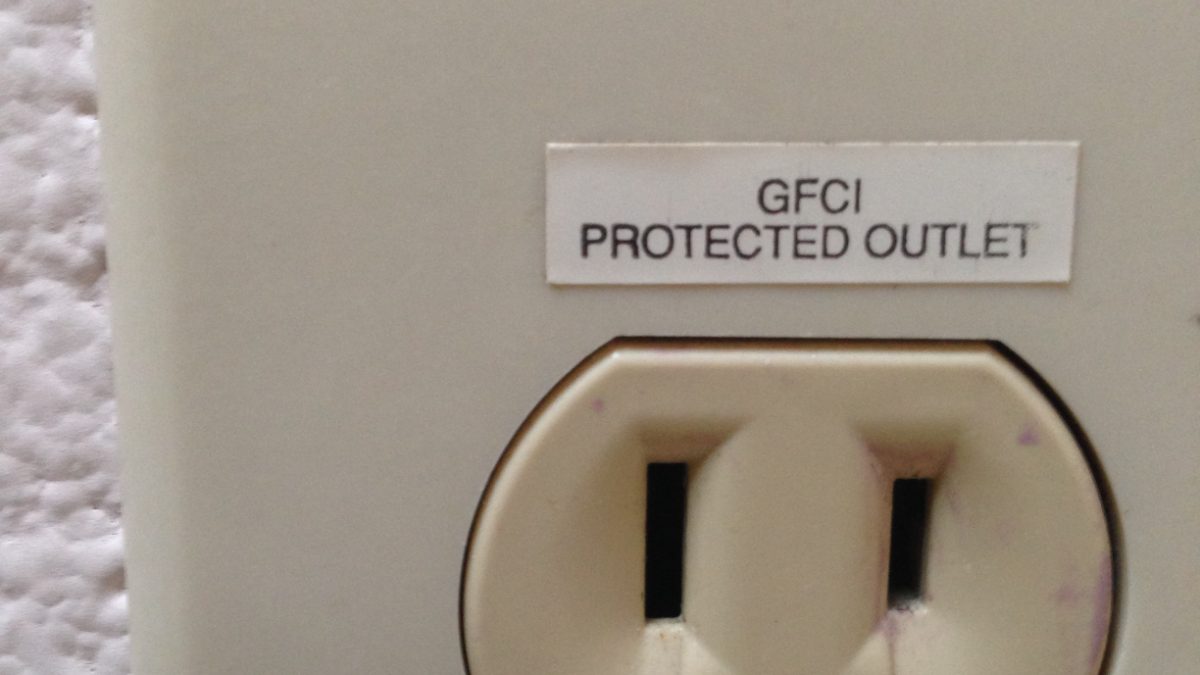
That convenience has a cost. Every outlet, cord and appliance downstream adds its own small leakage. As a result, a GFCI that protects a long run can trip on the combined total even when no single item is faulty. It also means that when a GFCI keeps tripping, the cause may be in a room you were not thinking about.
If outlets in another room went dead at the same time, our guide to a partial power outage shows how to trace them back. If the GFCI simply will not reset at all, our guide to an outlet not working covers that problem step by step.
5 Safe Checks Before You Call an Electrician
If your GFCI keeps tripping, start with these checks. None of them involve removing a cover plate or touching wires. Work through them in order, and stop at the first sign of heat, scorching, a smell or water near the box.
- Unplug everything on the circuit. Check the GFCI and every outlet it protects, including the garage, the bathroom and outdoors. Then press RESET firmly until it clicks.
- Add items back one at a time. Wait a few minutes between each. If the GFCI keeps tripping on one appliance, stop using that appliance.
- Look for water. Check outdoor covers, the area around the sink, and the floor near basement receptacles. Let a wet receptacle dry fully before you reset it again.
- Read the status light. Many newer GFCIs test themselves. Leviton's indicator light guide says a solid or blinking red light can mean a failed self-test or end of life, and if RESET does not clear it, stop using the outlet.
- Press TEST, then RESET. The power should cut on TEST and return on RESET. If it does not, the device has failed and needs replacing by an electrician.
Write down what you find: when it trips, what was running and what the weather was. That record often saves half an hour of diagnosis on the service call.
The Numbers Behind a GFCI Trip
A few figures explain why a GFCI keeps tripping on things a breaker ignores. They also explain why the fix is rarely a stronger device.
| Item | The figure | Why it matters |
|---|---|---|
| Class A trip level | About 4 to 6 milliamps of leakage | Small enough to trip on a damp cord |
| Trip speed | As little as 1/40 of a second | Fast enough to stop a shock from becoming an injury |
| Household receptacle circuit | 15 amps, or 15,000 milliamps | A breaker ignores leakage a GFCI acts on |
| Near water | Receptacles within 1.5 m of a sink, bathtub or shower stall | Required to have Class A GFCI protection |
| Outdoors | Standard receptacles within 2.5 m of finished grade | Required to have Class A GFCI protection |
| Testing | Once a month, with the TEST button | Confirms the device can still trip |
The trip speed comes from the U.S. Occupational Safety and Health Administration's guidance on ground fault circuit interrupters. The 4 to 6 milliamp window is the Class A range in the harmonized CSA C22.2 No. 144.1 and UL 943 standard. Monthly testing is the instruction printed on most GFCIs, and Leviton repeats it in its homeowner guide.
Ontario GFCI Rules Worth Knowing
The Ontario Electrical Safety Code decides where a GFCI is required. Knowing the main locations helps you tell whether a tripping device can simply be removed. In short, it cannot.
- Near water. The Canadian Electrical Code requires Class A GFCI protection for receptacles within 1.5 m of sinks, bathtubs or shower stalls, as Electrical Industry Canada's code guide explains. That covers most kitchen counter and bathroom receptacles.
- Outdoors. Under Rule 26-704, standard 15 and 20 amp receptacles outdoors and within 2.5 m of finished grade need Class A GFCI protection, including carports that are mostly open.
- Replacements. Bulletin 26-29-6 says replacing an outdoor receptacle means installing a GFCI protected one, even if the old one was not.
So when a GFCI keeps tripping on a required circuit, the answer is to fix the leak, never to remove the protection. Our guide to two-prong outlets in an ungrounded house explains the other common use for a GFCI in older homes.
Why Hamilton Homes Trip More
Hamilton's housing stock and weather shape which cause we find. With a GFCI that keeps tripping, the age of the house and the season are usually the best clues.
- Pre-war homes in Durand, Kirkendall, Crown Point and the North End. GFCIs are often added later to ungrounded circuits, and old cable insulation leaks more as it dries out. A house with several problem circuits may be due for home rewiring.
- 1960s and 1970s homes on the Mountain, in east Hamilton and in Stoney Creek. Original exterior boxes and covers have been through fifty winters, and many basements have since been finished around a sump pump.
- Newer builds in Ancaster, Binbrook and Waterdown. One GFCI often protects a bathroom, the garage and the front porch, so a trip in one place kills all three.
- Every neighbourhood, every season. Outdoor lighting in November, block heaters in January and spring melt in March are when our GFCI calls peak.
What a Licensed Electrician Does About It
When a GFCI keeps tripping, a proper repair finds the leak before anything is replaced. On an Apollo service call, the work runs in this order.
- Map the circuit. We find every receptacle, light and appliance the GFCI protects, including the ones in other rooms.
- Separate the load from the wiring. With everything unplugged, we test whether the GFCI holds, then measure leakage on the suspect appliances.
- Test the wiring. An insulation resistance test finds damaged cable and water in boxes without opening every wall.
- Fix the cause. That might be a dry box and a new in-use cover, a repaired cable, a corrected neutral, or a new GFCI that is correctly matched to the circuit.
- Test the result. The GFCI is tripped with a tester and with its own TEST button, and we confirm every downstream outlet is protected.
The Electrical Safety Authority explains when electrical work needs a notification and inspection. A repeat trip is a symptom rather than a part swap, so a Licensed Electrical Contractor should diagnose it and take out any notification the repair needs. This is routine work for our residential electrical services team, and our electrical safety inspection checks every GFCI in the house at once.
Who to Call, and How Fast
With a GFCI that keeps tripping, decide by what you see and what the circuit runs, not by the time of day.
| What you notice | Who to call | How soon |
|---|---|---|
| Smoke, flame, sparks or a shock injury | 911 | Now |
| Water near a receptacle, heat or scorch marks | A licensed electrician, with the breaker off | Today, at any hour |
| A tripped GFCI on a sump pump | A licensed electrician | Today, before the next rain |
| Trips with nothing plugged in, or will not reset | A licensed electrician | Within a few days, left off |
| Trips only with one appliance | The appliance maker or a repair shop | Stop using it until then |
We offer 24/7 emergency service for the urgent rows. For anything with water, heat or a shock, our emergency electrician in Hamilton page explains what happens after you call. If a storm or a power surge came before the trips started, our guide to power surge damage to appliances is worth reading too.
What Hamilton customers say
Came same day and all was in order within 15 minutes.
Sam The Handyman, via HomeStars
He is an expert at diagnosing complex problems that others couldn’t diagnose.
Mark Crooker, Optimal Property Management, via Trusted Pros
Honest, quality work, he really knows his trade.
Tom, Dundas
Frequently Asked Questions
Is it dangerous if my GFCI keeps tripping?
The trip itself is the GFCI protecting you, so the device is not the danger. The danger is whatever it keeps detecting: water in a box, a leaky appliance or damaged wiring. Trips caused by one appliance are usually low risk once it is unplugged. Trips with nothing plugged in, or with heat or water near the receptacle, need a licensed electrician.
Can a bad GFCI outlet trip for no reason?
Yes. GFCIs wear out, and a worn device can trip randomly, refuse to reset or stop protecting altogether. Many newer models run a self-test and show a red or flashing light when they fail. If pressing TEST and RESET does not clear the light, or the device will not hold, it needs to be replaced by an electrician.
Why does my GFCI trip when it rains?
A GFCI keeps tripping in the rain when water is reaching the receptacle, a cord connection or something plugged in outside. Cracked covers, flat covers that only seal when closed, and extension cord joints lying on wet ground are the usual causes. A weatherproof in-use cover and outdoor rated cords normally fix it. If it still trips in dry weather, the wiring needs testing.
Can I replace a GFCI with a regular outlet to stop the tripping?
No. Receptacles near sinks, bathtubs and showers, and most outdoor receptacles, must have Class A GFCI protection under the Ontario Electrical Safety Code. Removing it leaves the leak in place and removes the device that stops a shock. The safe fix is to find and repair whatever the GFCI keeps detecting.
How often should I test a GFCI outlet?
Once a month. Press TEST and confirm the power goes off, then press RESET and confirm it comes back. Check any outlets the GFCI protects as well. If the power does not cut on TEST, or the device will not reset, stop using it and have a licensed electrician replace it.
Does Apollo Electric fix GFCIs that keep tripping in Hamilton?
Yes. Apollo Electric Inc. diagnoses and repairs GFCI trips across Hamilton, Stoney Creek, Ancaster, Dundas, Waterdown and Burlington. We map the circuit, test the appliances and the wiring, and fix the cause rather than just swapping the device. Call 905-921-5487 for 24/7 emergency service.
References and Resources
References
- Electrical Safety Authority, Bulletin 26-18-15, AFCI and GFCI in a dwelling unit (May 2025)
- Electrical Safety Authority, Bulletin 26-29-6, Electrical replacement and alterations in dwelling units
- Electrical Safety Authority, Notifications and Inspections
- Electrical Safety Authority, Check the ECRA/ESA licence before you hire
- Electrical Safety Authority, Ontario Electrical Safety Code
- Electrical Industry Canada, Guide to the Canadian Electrical Code, Part I, Instalment 16
- U.S. Occupational Safety and Health Administration, Ground-Fault Circuit Interrupters
- Leviton, What to do when your GFCI trips: a homeowner's guide
- Leviton, What the LED light on your GFCI outlet is telling you
Helpful resources
- ESA contractor locator: check any electrician's ECRA/ESA licence before they start
- Government of Canada recalls: check GFCIs, extension cords and small appliances for recalls
- Apollo Electric tips and guides: every troubleshooting guide in one place
- Contact Apollo Electric: book a GFCI diagnosis anywhere in our service area
Image credits: GFCI receptacle by Ben Kurtovic and new GFCI receptacle by Steven Pavlov, both CC BY-SA 4.0; hair dryer plug by Tony Webster, CC BY 2.0; GFCI protected outlet by dankeck, CC0. All via Wikimedia Commons, cropped to 16:9.
Apollo Electric Inc.
GFCI keeps tripping after the five checks? We will find the leak and fix it properly.
Apollo Electric Inc., 83 Ferndale Ave, Hamilton, ON L8K 4L7
905-921-5487 · ECRA/ESA 7009372 · WSIB compliant · 24/7 emergency service