
Electrical Troubleshooting · Hamilton, ON
One Outlet Not Working in Hamilton
It is usually a tripped GFCI, a wall switch or a loose connection. Five safe checks find most of them, and the rest is a short job for a licensed electrician.

 WSIB compliant · 30+ years · ECRA/ESA 7009372
Quick answer
One outlet not working while the rest of the room has power is usually a tripped GFCI on another outlet, a wall switch that controls it, or a loose wire in the box. Press every GFCI reset button and try the switches first. If it stays dead, feels warm or smells hot, turn the breaker off and call an electrician.
It is always the outlet you need. The coffee maker goes dead, or the bedside lamp, or the basement freezer. Meanwhile, every other outlet in the room works.
A single outlet not working is a routine service call in Hamilton, and most of the causes are simple. This guide covers the seven causes we find most and the five checks you can safely do first. It also shows the point where a licensed electrician should take over.
Why Is One Outlet Not Working When the Breaker Looks Fine?
Because the breaker is only one of several things that can cut power to a single outlet. A household circuit works like a chain. Power leaves the panel, reaches the first outlet, then passes through it to the next one down the line.
That chain explains almost every outlet not working on its own. When something interrupts power at one link, that outlet goes dead, and so does every outlet after it. Meanwhile, everything before it keeps working. The breaker never moves, because nothing drew too much current.
Three things commonly break the chain without touching the breaker: a GFCI outlet that has tripped upstream, a wall switch wired to control the outlet, or a connection that has worked loose at one of the devices. You can check the first two yourself in a few minutes.
Where Is the GFCI That Controls This Outlet?
Look for an outlet with TEST and RESET buttons wherever water is close. That means bathrooms, the kitchen counter, the laundry area, the garage, unfinished basements and outside walls. One GFCI protects every ordinary outlet wired after it. So the reset for a bedroom outlet not working can be in the bathroom next door, or even in the garage. If that GFCI resets but trips again soon after, our guide to a GFCI that trips again and again covers the causes.
Outdoor outlets are the classic example. The outlets on a front porch and a back deck often share one GFCI, and it may sit indoors near the door. Did several outlets go dead across different rooms at once? Then our guide to a partial power outage walks through that wider pattern.
7 Causes of a Dead Outlet, From Simplest to Most Serious
Most calls about an outlet not working end at one of these seven. The clue column shows what to look for. The last column tells you whether it is a reset or a repair.
| Cause | The clue | Reset or repair |
|---|---|---|
| 1. Tripped GFCI | This outlet or one nearby has a RESET button sticking out, or its light is off or red | Reset it yourself. If it will not reset, call |
| 2. Switched outlet | Only the top or bottom half works, or it works only with a wall switch on | Flip the switch. Nothing is broken |
| 3. Tripped breaker | A breaker sits between ON and OFF, or an arc-fault breaker shows a trip flag | Reset once. If it trips again, call |
| 4. Loose backstab connection | The outlet cuts in and out, or works only when the plug is wiggled | Repair by a licensed electrician |
| 5. Loose connection upstream | This outlet and the ones after it along the same wall are all dead | Repair by a licensed electrician |
| 6. Worn or failed receptacle | Plugs fall out, the face is cracked, or a slot has brown marks | Replace the receptacle |
| 7. Older wiring fault | House from the 1960s or 1970s, aluminum wiring, or warm plates in more than one room | Inspection and a written plan |
Causes four and five are the ones we repair most often. A backstab, also called a push-in connection, holds the wire with a small spring clip instead of a screw. The clip sits in a hole at the back of the receptacle. Over years of plugging, unplugging and heating, that grip loosens until the circuit opens.
The loose connection is not always at the dead outlet itself. In fact, it is often at the last working outlet before it, because that device passes power down the line. That is why an electrician opens the outlets on either side, not only the one that stopped.
Heat changes the urgency, though. A loose connection that has started to scorch is no longer a simple dead outlet, it is a fire risk. Is the plate warm, discoloured or smelling of hot plastic? Then keep that breaker off and read our guide to an outlet burning smell. If it sparked just before it went dead, read what a spark from an outlet means before you reset anything.
5 Safe Checks Before You Call an Electrician
These checks for an outlet not working never involve removing a cover plate or touching wires. Work through them in order, and stop at the first sign of heat.
- Test with something you know works. Plug in a lamp or phone charger that just worked in another room. Appliances fail too, and a dead hair dryer looks exactly like an outlet not working.
- Press every GFCI RESET button. Check the bathrooms, kitchen counter, laundry, garage, basement and outdoor outlets. If RESET will not click in, press TEST first, then press RESET firmly until it latches.
- Try the wall switches. In living rooms and bedrooms, a switch by the door often controls half of an outlet for a floor lamp. Turn on each nearby switch, then test both halves again.
- Open the panel door, not the panel cover. With dry hands, look for a breaker that sits out of line with the others or shows a trip flag. Push it fully OFF, then back ON, once.
- Stop if anything is warm, buzzing or smells hot. Turn that breaker off, keep the outlet out of use, and call a licensed electrical contractor.
If a breaker trips again right after you reset it, leave it off. A breaker that will not hold is reporting a fault. Our guide to a breaker that keeps tripping explains what it is telling you.
Why Will the GFCI Not Reset?
A GFCI that refuses to latch is telling you one of three things. First, there may be no power reaching it, because a breaker or another GFCI upstream is off. Second, it may be detecting a real ground fault, often from moisture in an outdoor box or a damaged cord. Third, the device itself may have failed, which every GFCI eventually does.
Unplug everything from that GFCI and the outlets after it, then try RESET again. If it still will not hold, leave it for an electrician. Never swap a GFCI for an ordinary outlet to get power back. That removes shock protection the Code requires in that location.
When Only Half the Outlet Works
Half of an outlet not working, while the other half is fine, is almost always a switched outlet. Electricians call it a split receptacle. The metal tab joining the two halves is snapped off. As a result, one half stays live and the other follows a wall switch.
Builders do this so a floor lamp can come on from the switch by the door. In that case nothing is broken. Find the switch, and label it if it keeps confusing people at home. If that wall switch hums or feels warm, though, read what a buzzing switch means before using it again.

It is different when half the outlet used to work and now does not, with every switch tried. That usually means a loose connection on the half that died, or a receptacle that has failed inside. Leave that half unused until it has been checked.
The Numbers Behind a Dead Outlet
A few figures explain why one outlet not working can trace back to a fault several outlets away. They also explain why the repair comes with rules attached.
| Item | The figure | Why it matters |
|---|---|---|
| Typical household circuit | 15 amps at 120 volts, about 1,800 watts in total | One space heater uses most of it |
| Outlets on one circuit | Up to 12 on a 15 amp circuit, counting lights and receptacles, under Rule 8-304 of the Canadian Electrical Code | One loose link can cut power to several outlets |
| GFCI near water | Required within 1.5 metres of sinks, bathtubs and shower stalls | A replaced bathroom outlet must be GFCI protected |
| GFCI outdoors | Required on outdoor outlets within 2.5 metres of finished grade | A replaced outdoor outlet must be GFCI protected |
| Tamper-resistant outlets | Required on like-for-like replacements, Rule 26-706 | A new outlet has shutters in the slots |
| Arc-fault protection | Bedroom outlet circuits since 2002, most of the home since the 2015 Code | Newer homes have more breakers that can trip quietly |
The Electrical Safety Authority's May 2025 bulletin on replacements in existing homes confirms the GFCI and tamper-resistant rows. When a receptacle is replaced, the new one must be tamper-resistant. In a bathroom or outdoors, it must also be GFCI protected. As a result, the repair is sometimes a better device, not the same one.
Arc-fault breakers deserve a word as well. An ESA analysis of Ontario Fire Marshal data found that arc-fault protection could cut residential electrical distribution fires by up to 71%. The trade-off is that an arc-fault breaker can also trip on a failing appliance or a loose plug. In a newer house, a dead bedroom outlet can simply be an arc-fault breaker that tripped overnight. Our guide to what a tripped AFCI means explains how to tell a nuisance trip from a wiring fault.
Why Older Hamilton Homes Lose Outlets First
Hamilton's housing stock shapes which cause we find. The age of the house is usually the best clue to where an outlet not working will lead.
- Pre-war homes in Durand, Kirkendall, Crown Point and the North End. Two-slot receptacles with worn contacts are common, and some houses still run on knob and tube wiring behind the plaster. A weak grip at the front of the receptacle is the usual failure.
- 1960s and 1970s homes on the Mountain, in east Hamilton and in Stoney Creek. This is the era of aluminum branch wiring. A receptacle not approved for aluminum loosens over time, and it can go dead before it gets warm. Our guide to aluminum wiring in Hamilton homes explains why the connections, not the wire, carry the risk.
- 1980s to early 2000s houses across the city. Backstabbed receptacles were a common time saver in this period, and they are a frequent reason for a dead outlet, or one that cuts in and out.
- Newer builds in Binbrook, Waterdown and Ancaster. More GFCI and arc-fault protection means more devices that can trip, and more reset buttons to find.
What ties these together is wear at the connection. Every plug-in, every heating cycle and every year of load works a connection a little looser. Consequently, the outlets that fail first are the ones used hardest. Think kitchen counters, bedside walls and the spot where the space heater lives all winter.
What a Licensed Electrician Does About It
A proper repair of an outlet not working finds the cause, not just a part to swap. On an Apollo service call, the work runs in this order.
- Identify and isolate the circuit. The circuit is found, switched off and tested dead before any cover comes off.
- Trace the chain. The last working outlet and the dead outlet after it are opened, because the fault is usually at one of the two.
- Remake every connection. Backstabbed wires move to the screw terminals, and any heat-damaged conductor is trimmed back to clean wire.
- Replace what has failed. A worn receptacle is replaced with a tamper-resistant one, with GFCI protection where the location calls for it.
- Test under load. Power is restored, and the outlet, the GFCI and the breaker are tested before we leave.
Replacing a receptacle is not covered by the homeowner exemption in Ontario. The Electrical Safety Authority says a notification may not be needed when an owner-occupant replaces certain light fixtures and switches. Receptacles are not on that list. A Licensed Electrical Contractor takes out the ESA permit on your behalf.
Most repairs for an outlet not working take a single visit. However, the trace sometimes turns up aluminum wiring, ungrounded circuits or several failing devices on one run. In that case, we put a written scope in front of you first. For a wider look at the house, our electrical safety inspection covers the panel, the grounding and the devices most likely to fail next.
Why Does a New Outlet Have Shutters in the Slots?
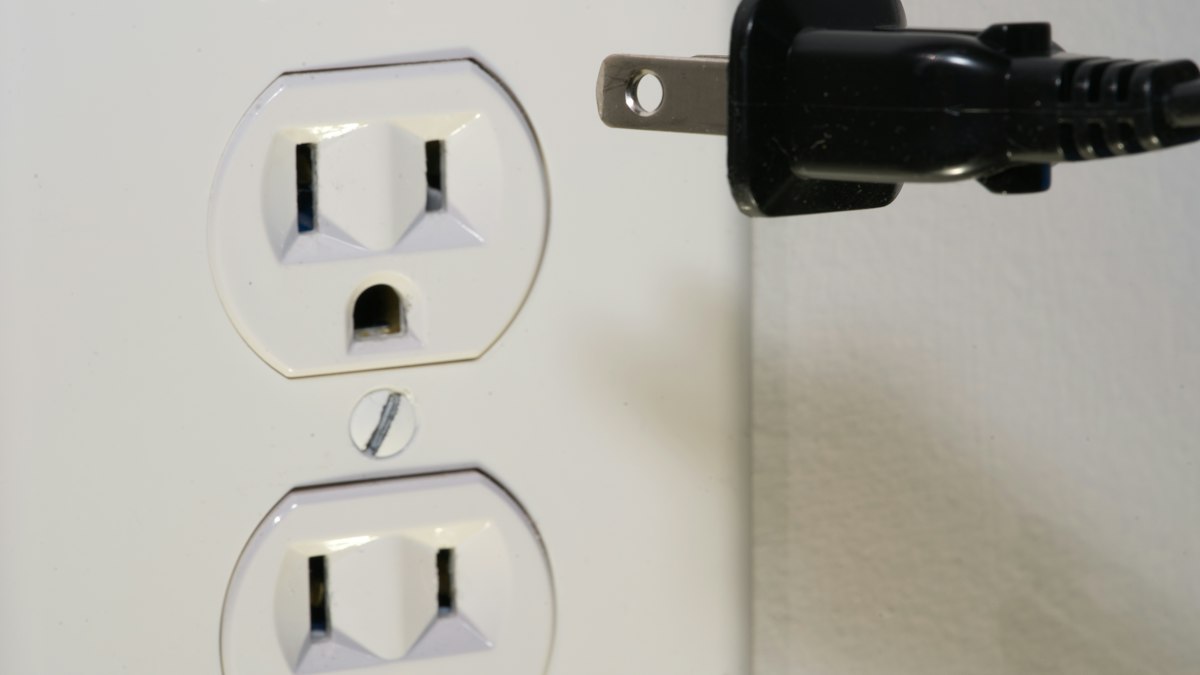
Those shutters make it a tamper-resistant receptacle. They open only when both blades of a plug push in together, so a child cannot push a key or hairpin into one slot. ESA requires them on like-for-like replacements in homes, so any outlet a licensed electrician installs today will have them. Push the plug in straight and evenly and it seats normally.
Who to Call, and How Fast
With a dead outlet, decide by what you can see and smell, not by the time of day.
| What you notice | Who to call | How soon |
|---|---|---|
| One outlet not working, nothing warm and nothing smelling | A licensed electrical contractor | Book a visit |
| A dead outlet that feeds a fridge, freezer, sump pump or medical device | A licensed electrical contractor | Same day |
| A warm, scorched or buzzing outlet, or a smell of hot plastic | Breaker off, then a licensed electrical contractor | Now |
| Outlets dead in several rooms or half the house | Check the panel, then a licensed electrical contractor | Same day |
| The whole street is dark | Alectra Utilities, 1-833-253-2872 | Now |
| Smoke, flame or sparks | 911, from outside the house | Now |
Apollo Electric answers 905-921-5487 24 hours a day. Our 24 hour electrician service covers Hamilton, Dundas, Ancaster, Waterdown, Stoney Creek and the surrounding area. For the full list of what is urgent overnight, see what counts as an electrical emergency in Hamilton.
What Hamilton customers say
The weather was bad but he still came and my fridge plug is working now. Great work.
Sam, via HomeStars
He is an expert at diagnosing complex problems that others couldn’t diagnose.
Mark Crooker, Optimal Property Management
Honest, quality work, he really knows his trade.
Tom, Dundas
Frequently Asked Questions
How do I find which GFCI controls a dead outlet?
Check every outlet with TEST and RESET buttons, starting with the bathrooms, kitchen counter, laundry, garage, basement and outdoor outlets. One GFCI protects every ordinary outlet wired after it, so the reset for a dead outlet can be in another room. If no GFCI brings it back, the fault is elsewhere on the circuit, and an electrician should trace it.
Why does my outlet only work when the light switch is on?
It is a switched outlet. One half of the receptacle, or sometimes all of it, runs through a wall switch so a lamp can come on from the doorway. Nothing is wrong with it. However, an outlet that used to work without the switch and now does not should be checked, because that points to a wiring change or a fault.
Can a loose outlet cause a fire?
Yes. A loose connection heats up every time current passes through it, and repeated heating damages the insulation and the receptacle. That is why an outlet that cuts in and out deserves attention before it fails completely. Warmth, discolouration or a smell of hot plastic means the breaker should go off and stay off until a licensed electrician has opened it.
Why has my outlet stopped working after a storm?
A surge, or power dropping and returning suddenly, can trip a GFCI or an arc-fault breaker, so check both first. A surge can also damage a GFCI so that it no longer resets. If your neighbours have power and the outlet stopped working for good, the fault is inside your home. A licensed electrician should test the circuit.
Is a dead outlet an emergency?
Usually not. An outlet not working with no heat, smell or noise can wait for a booked visit, unless it powers a fridge, freezer, sump pump or medical equipment. It becomes an emergency when the outlet is warm, scorched or buzzing. In that case, switch the breaker off and call a licensed electrician right away.
Why do outlets along one wall stop working together?
Outlets on a circuit are usually wired as a chain, with power passing through each one to the next. A loose connection at one outlet cuts power to every outlet after it, while the ones before it keep working. The fault is normally at the last working outlet or the first dead one, which is exactly where an electrician starts.
References and Resources
References
- Electrical Safety Authority, Notifications and Inspections
- Electrical Safety Authority, Bulletin 26-29-6, Electrical replacement and alterations in dwelling units (May 2025)
- Electrical Safety Authority, Bulletin 26-18-15, AFCI and GFCI in a dwelling unit (May 2025)
- Electrical Safety Authority, Why you should hire a Licensed Electrical Contractor
- Electrical Safety Authority, Ontario Electrical Safety Code
- Canadian Electrical Industry News Week, Changes to the 2021 Canadian Electrical Code Part 1, Section 8 (Rule 8-304)
- Canadian Electrical Industry News Week, Latest update to the Ontario Electrical Safety Code includes new safety requirements
Helpful resources
- ESA contractor locator: check any electrician's ECRA/ESA licence before they start
- ESA home safety tips: extension cords, space heaters and everyday electrical safety
- Alectra Utilities outage reporting: for a dark street or a downed line in Hamilton
- Government of Canada recalls: check power bars, cords and chargers before blaming the outlet
- Apollo Electric tips and guides: every troubleshooting guide in one place
- Residential electrical services in Hamilton: outlets, GFCI upgrades, panels and rewiring
Apollo Electric Inc.
Outlet not working after the five checks? We will trace it and fix it properly.
Apollo Electric Inc., 83 Ferndale Ave, Hamilton, ON L8K 4L7
905-921-5487 · ECRA/ESA 7009372 · WSIB compliant · Answered 24 hours a day