Electrical Troubleshooting · Hamilton, ON
Outlet Burning Smell in Hamilton Homes
An outlet burning smell almost always means a loose or failing connection. Switch that circuit off at the panel first, then have a licensed electrician open it.
 WSIB compliant · 30+ years · ECRA/ESA 7009372
Quick answer
An outlet burning smell means a part of the receptacle or the plug in it is overheating, most often from a loose wire connection, a worn device, or too much load. Switch that circuit off at the breaker and stop using the outlet. If you see smoke or the smell keeps getting stronger, get everyone out and call 911.
Most people notice it before they can place it. The outlet smells like burning plastic, or something faintly fishy drifts through a bedroom. Then a cover plate feels warm to the back of a hand. That combination is your wiring telling you a connection is failing.
Apollo Electric Inc. answers these calls across Hamilton 24 hours a day, under ECRA/ESA licence 7009372. This guide explains what an outlet burning smell means, the five things to do in the next few minutes, and what actually fixes it.
What Does an Outlet Burning Smell Mean?
An outlet burning smell means heat is building where current passes from one metal part to another. Every connection resists current a little, and resistance turns into heat. A tight connection barely warms. A loose one can get hot enough to soften the plastic around it, and that plastic is what you smell.
Across Zvonko Lipovac's 30-plus years on Hamilton service calls, the pattern is consistent. The smell almost always starts at a connection. That means a wire under a terminal screw, a wire pushed into a backstab hole, or the metal contacts that grip a plug. The cable inside the wall is rarely the first thing to fail.
People describe the odour in two ways. Some say the outlet smells like burning plastic. Others say it smells like fish, which surprises them. Both point at the same thing: plastic and insulation are being heated past what they were built for.
An outlet burning smell also tends to come and go. A connection heats while something draws power and cools when it stops. As a result, you may only notice it when a heater or a kettle runs. That pattern does not make it less serious, because each heating cycle loosens the connection a little more.
Is a Warm Outlet Normal?
No. A cover plate should feel the same temperature as the wall around it, even under load. A plug can feel slightly warm while a heater runs, but a hot outlet is never normal. Warmth at the plate is an early stage of the same problem, so it deserves the same response.
What to Do Right Now: 5 Safe Steps
Work through these in order the moment you notice an outlet burning smell. None of them involves removing a cover plate or touching anything hot.
- Check for smoke, flame or sparks first. If you see any, or the smell keeps getting stronger, get everyone out and call 911 from outside. A fire inside a wall can spread where you cannot see it.
- Switch off the breaker for that outlet. Open the panel door, not the inner cover, with dry hands and dry feet. If the breakers are not labelled, switch off the main. If the panel itself is hot, buzzing or smells of burning, do not touch it. Get everyone out and call 911.
- Then unplug what was in the outlet. With the power off, pull each plug by its body, never by the cord. If a plug has melted onto a hot outlet, leave it in place for the electrician.
- Leave the circuit off. Do not reset the breaker to test it. Tell everyone at home which outlet is out of service, and put a strip of tape across it.
- Call a licensed electrical contractor. Note what was plugged in, when the smell started, and whether lights flickered or a breaker tripped. Apollo Electric answers 905-921-5487 around the clock.
If you rent, tell your landlord right away. In Ontario, anyone hired to do electrical work must be a Licensed Electrical Contractor, and the owner arranges the repair.
6 Common Causes of a Burning Smell From an Outlet
The source of an outlet burning smell is almost always one of six things. Each one leaves a clue, and the clue tells an electrician where to start.
| Cause | The clue | Why it heats |
|---|---|---|
| 1. Loose terminal or backstab connection | Smell or warmth gets worse under load, and the outlet sometimes cuts out | A loose wire touches less metal, so resistance and heat climb |
| 2. Worn receptacle | Plugs slide out or droop, with brown marks around a slot | Tired contacts grip the plug blades weakly and heat at that point |
| 3. Overload | Smell after a space heater, kettle or hair dryer has run a while | Sustained high current heats every weak point on the circuit |
| 4. Damaged plug, cord or charger | Smell is strongest at the plug, and the cord feels hot | A failing device or a broken cord strand overheats on its own |
| 5. Aluminum wiring on the wrong device | House built mid 1960s to late 1970s, warm plates in several rooms | Aluminum connections loosen when the device is not approved for aluminum |
| 6. Arcing in old or damaged wiring | Crackling or buzzing, and flicker on the same circuit | Current jumping a gap produces intense heat in a tiny spot |
The first two causes are behind most of the burnt receptacles we replace. A backstab connection, where the wire is pushed into a hole instead of wrapped under a screw, loosens with years of plugging and unplugging. A receptacle that no longer holds a plug firmly has the same weakness at the front. If it also throws sparks when a plug goes in, our guide to a sparking outlet explains which sparks are normal.
Overload is the seasonal one. The Electrical Safety Authority advises plugging a space heater directly into a wall outlet, never into an extension cord or power bar. A heater on a power bar is one of the most common sources of a burning smell from an outlet that we trace in winter.
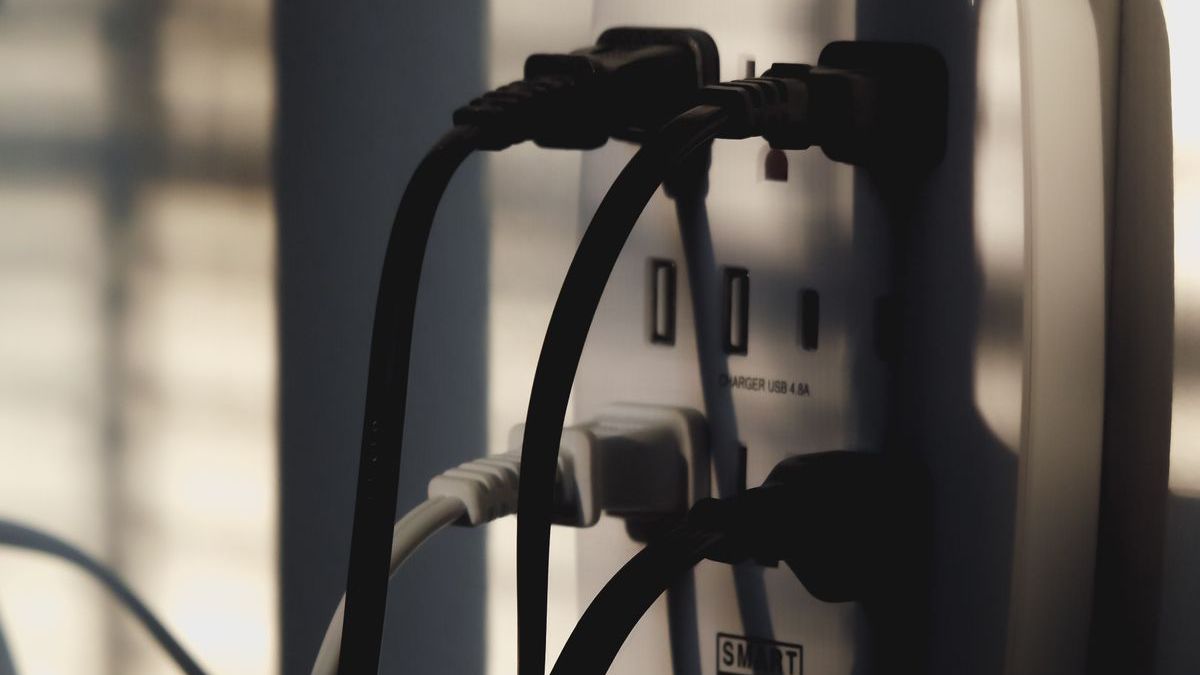
Check cords and chargers before you blame the wall. A hot plug is not the same as a hot outlet, and the hotter part is usually the culprit. Health Canada advises against buying anything that plugs in without a Canadian certification mark such as CSA, cUL or cETL. You can also check older products against the Government of Canada recalls database.
Causes five and six are wiring problems, not device problems. Our guide to aluminum wiring in Hamilton homes explains why the connections are the risk. If flicker comes with the smell, see what each flickering light pattern means.
Could the Smell Be Coming From Something Else?
Sometimes. In the first cold week of the year, baseboard heaters and furnaces burn off a season of dust. That smell fades within an hour or two. A new appliance can also smell for its first few uses.
However, a burning smell from an outlet stays put. If your nose leads you to one outlet, switch or plug, treat it as electrical. The same goes for an outlet that smells like burning every time one appliance runs. A switch that also crackles or hums is covered in our guide to a buzzing light switch.
Why the Breaker Did Not Trip
A breaker protects the wire from too much current. It does not measure heat at a loose screw. That is why an outlet burning smell often arrives with no tripped breaker at all.
Most household receptacles in Hamilton sit on 15 amp circuits at 120 volts. The arithmetic is simple: watts divided by 120 gives amps. Check the label on your own appliance, since models vary.
| Load | Typical rating | Current at 120 V | Share of a 15 A circuit |
|---|---|---|---|
| Phone charger | 20 W | 0.2 A | About 1% |
| Space heater on high | 1,500 W | 12.5 A | 83% |
| Electric kettle | 1,500 W | 12.5 A | 83% |
| Hair dryer on high | 1,875 W | 15.6 A | Over 100% |
| Full 15 A circuit | 1,800 W | 15 A | 100% |
A space heater alone uses most of a 15 amp circuit, for hours at a time. Add a kettle on the same circuit and the breaker trips, which is the breaker doing its job. The dangerous case is quieter. A heater pulling 12.5 amps through a loose screw stays under the trip point while the connection cooks.
Homes wired under recent editions of the Ontario Electrical Safety Code have arc-fault protection on many receptacle circuits. It can detect the arcing a damaged connection produces. A house wired decades ago usually has none. If a breaker on that circuit is also tripping, read about a breaker that keeps tripping before you reset it again.
Why Older Hamilton Homes Smell First
Housing stock matters more than any other factor. Across Hamilton, outlet burning smell calls cluster in three kinds of homes.
- Pre-war houses in Durand, Kirkendall, Crown Point and the North End. Many still have two-slot ungrounded receptacles worn by decades of plugs. Some still have knob and tube wiring behind the plaster.
- 1960s and 1970s houses in Stoney Creek, east Hamilton and parts of the Mountain. This is the aluminum branch wiring era, where a receptacle swapped for the wrong type becomes a heat point.
- Rentals and student houses in Westdale and Ainslie Wood. More people per room means more power bars and space heaters on fewer outlets.
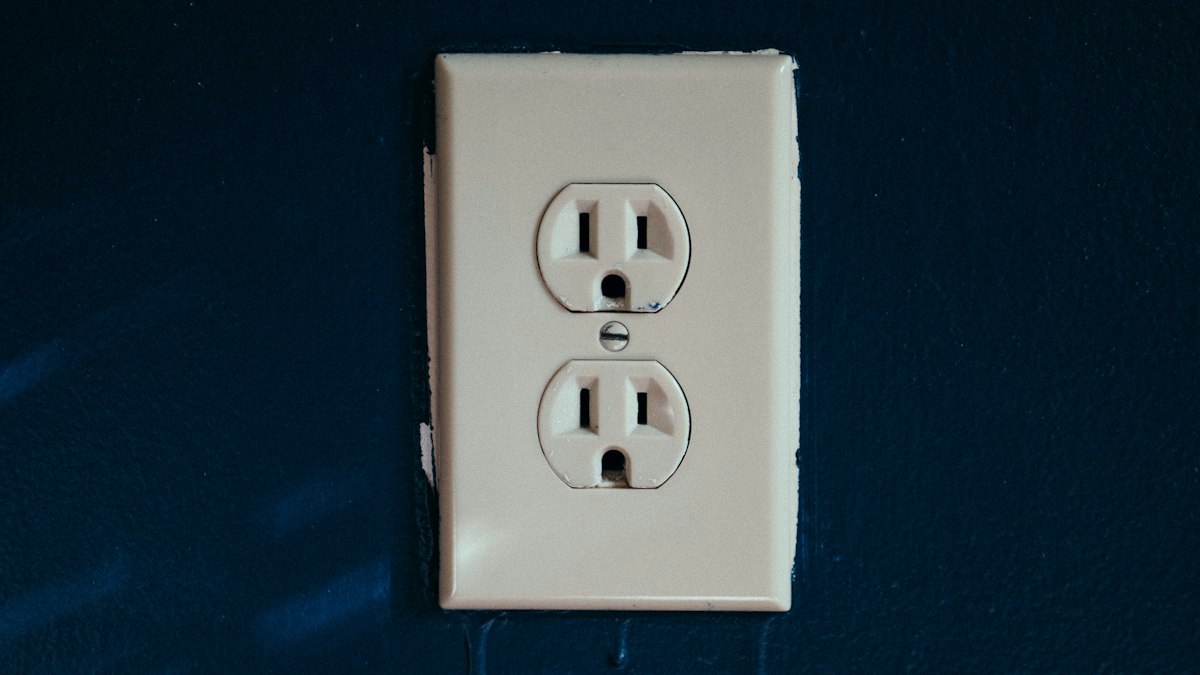
Age alone is not the hazard; the hazard is age plus load. A receptacle that once ran a lamp now runs a space heater and a gaming PC on one power bar. The gap between what the wiring was built for and what it now carries is where an old house warns you first. Usually, that warning is an outlet burning smell.
911 or an Electrician: Who to Call
When you notice an outlet burning smell, decide by what you can see, not by the hour.
| What you see | Call |
|---|---|
| Smoke, flame, sparks, a smell that keeps getting stronger, or a panel that is hot, buzzing or smells of burning | 911, from outside the house |
| Smell or warmth at one outlet that stops once the breaker is off | A licensed electrical contractor, the same day |
| Several outlets warm at once, with no smoke and nothing at the panel | A licensed electrical contractor, now. Keep those circuits off until then |
| A downed line, a damaged service mast, or a sparking transformer outside | Alectra Utilities, 1-833-253-2872. Stay at least 10 metres back |
For the full list of what is urgent overnight, see what counts as an electrical emergency in Hamilton. Our 24 hour electrician service covers Hamilton, Dundas, Ancaster, Waterdown, Stoney Creek and the surrounding area.
Then check your smoke alarms tonight. The Ontario Fire Code requires a working smoke alarm on every storey and outside all sleeping areas. The Hamilton Fire Department lists electrical among the top causes of residential structure fires in the city.
What a Licensed Electrician Does About It
The fix for an outlet burning smell is not a new cover plate. It is finding the heat source and everything the heat has damaged. On an Apollo call, the work runs in this order.
- De-energize and test. The circuit is confirmed dead with a tester before anything is touched.
- Pull and inspect. Every termination, the device body, the box and the conductor insulation are checked for heat damage.
- Cut back and replace. Damaged conductor is trimmed to clean wire where length allows, and the new device is rated for the wiring and the load.
- Check the whole circuit. Every other device on that circuit is opened, because a loose connection upstream can show up as heat downstream.
- Test under load. The repair is loaded and rechecked, and the breaker size is confirmed against the wire.
This is not a do-it-yourself job in Ontario. The Electrical Safety Authority limits the homeowner exemption from filing a notification of work to certain light fixtures and switches. A receptacle is not on that list.
ESA's 2025 fire notice also lists receptacles and switches among the sources of electrical fires in Ontario homes. It found most of those fires trace back to incorrect or improper installation.
What Changes the Size of the Repair?
- One damaged device on sound wiring is a short repair.
- Heat damage running into the box or cable adds work, and sometimes a new length of cable.
- Several warm devices on one circuit points to a circuit-wide fix.
- Aluminum or knob and tube wiring turns a repair into a remediation plan, which should be scoped in writing.
Want the rest of the house checked during the visit? Our electrical safety inspection covers the panel, the grounding and the devices most likely to fail next.
How Do You Stop It Happening Again?
Most repeat cases of an outlet burning smell come down to a few habits, and all of them are cheap to fix.
- Run one heat-making appliance per outlet, plugged straight into the wall.
- Replace any receptacle that no longer grips a plug firmly.
- Buy only certified cords, power bars and chargers, and check the recall list for older ones.
- Never use a power bar as permanent wiring. If a room needs more outlets, have a licensed contractor add them.
- Ask about GFCI protection, surge protection and interconnected smoke alarms, which are low-cost upgrades with a large safety return.
What Hamilton customers say
They also fixed a few things upstairs that were just wrong, and discovered a serious fire hazard a previous owner had hidden inside the walls.
Jason Rondeau, Hamilton
He is an expert at diagnosing complex problems that others couldn't diagnose.
Mark Crooker, Optimal Property Management
Came same day and all was in order within 15 minutes. The weather was bad but he still came.
Sam, via HomeStars
Frequently Asked Questions
Is a burning smell from an outlet dangerous?
Yes. It means something at the outlet is hot enough to damage plastic or insulation, which is the stage before a fire. The Electrical Safety Authority lists receptacles and switches among the sources of electrical fires in Ontario homes. Switch the circuit off at the breaker, stop using the outlet, and have a licensed electrical contractor inspect it the same day.
Why does my outlet smell like fish?
A fishy odour near an outlet is a common description of overheating plastic and insulation. It often appears before any visible scorching, so it is an early warning rather than a harmless quirk. Treat it exactly like an outlet burning smell: breaker off, outlet out of use, and a licensed electrician to find the hot connection.
Can I keep using the outlet if the smell goes away?
No. A hot outlet that cools down has not been fixed, because the smell fades only when the load stops. Each heating cycle loosens the connection further and weakens the insulation around it. Leave the breaker off, or at least leave the outlet unused, until an electrician has opened it and confirmed the cause.
Can I replace a burnt outlet myself in Ontario?
The Electrical Safety Authority limits the homeowner exemption from filing a notification to certain light fixtures and switches in an owner-occupied single family home. A receptacle is not on that list, so doing the job yourself means filing a notification of work with ESA. A burnt outlet also needs the wiring behind it inspected, which a new device does not fix.
Why does my outlet smell when the space heater is on?
A typical space heater draws about 12.5 amps on high, which is most of a 15 amp circuit, for hours at a time. That steady load finds any weak point, such as a loose screw, worn contacts or a power bar. Plug the heater directly into the wall with nothing else on that outlet. If the smell continues, the receptacle needs inspection.
Should I call 911 or an electrician for an outlet burning smell?
Call 911 if there is smoke, flame, sparking, or a smell that keeps getting stronger, and call from outside the house. If the smell stops once the breaker is off and nothing is visibly burning, call a licensed electrical contractor the same day. Apollo Electric answers 905-921-5487 24 hours a day across Hamilton and the surrounding area.
References
- Electrical Safety Authority, Notifications and Inspections
- Electrical Safety Authority, Home Safety: space heaters and extension cords
- Electrical Safety Authority, Flash 25-06-FL, Residential fires linked to electrical wiring and equipment (May 2025)
- Electrical Safety Authority, Ontario Electrical Safety Code, 29th edition, in effect since 1 May 2025
- Health Canada, Buying electrical products online
- Government of Canada, Recalls and safety alerts
- City of Hamilton, Hamilton Fire Department release on smoke and carbon monoxide alarms
Apollo Electric Inc.
Outlet burning smell? Breaker off, then call. We will find the hot connection.
Apollo Electric Inc., 83 Ferndale Ave, Hamilton, ON L8K 4L7
905-921-5487 · ECRA/ESA 7009372 · WSIB compliant · Answered 24 hours a day