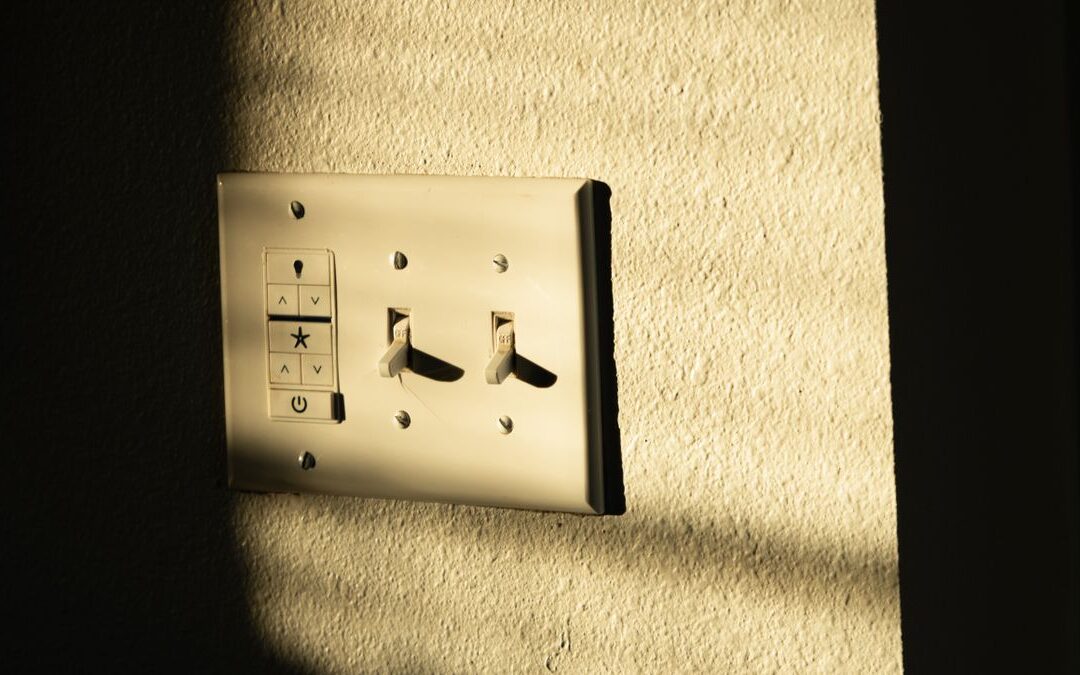
Electrical Troubleshooting · Hamilton, ON
Buzzing Light Switch in Hamilton
A faint hum from a dimmer is often harmless. A plain switch that buzzes, crackles or feels warm is not, and it needs a licensed electrician before it gets worse.

 WSIB compliant · 30+ years · ECRA/ESA 7009372
Quick answer
A buzzing light switch is usually a dimmer reacting to LED bulbs it was not designed for, which is annoying but rarely dangerous. A plain on/off switch should be silent, though. If a regular switch buzzes, crackles, feels hot or smells of hot plastic, turn that breaker off and call a licensed electrician.
You flip the switch and hear it. Sometimes it is a low hum, sometimes a steady buzz, and sometimes a faint crackle from behind the wall plate. Some of those sounds are harmless. One of them is an early warning of a connection that is overheating.
A buzzing light switch has become a common call in Hamilton since LED bulbs replaced incandescent ones. This guide explains what each sound means and the six causes we find most often. It also shows the point where the switch should be turned off and left off.
Is a Buzzing Light Switch Dangerous?
It depends on the type of switch, so work that out first. A dimmer and a plain on/off switch work in completely different ways. As a result, the same sound means different things.
A standard on/off switch is a simple mechanical contact. When it is on, the contact closes and current flows straight through. Nothing inside it should make a sound. So a buzzing light switch of the plain toggle or rocker type usually means current is jumping across a gap. That gap is a worn contact or a loose wire, and the arcing across it creates heat.
A dimmer is different. Inside is an electronic switch that turns the power on and off 120 times a second to lower the light. Because of that rapid switching, a faint hum from a dimmer can be normal, especially with LED bulbs at a middle setting.
- A faint, steady hum from a dimmer, with a cool or slightly warm plate. Usually a compatibility issue, not a hazard.
- Any buzz from a plain on/off switch. A fault. Leave it off and book an electrician.
- Crackling, sizzling, heat or a hot plastic smell from any switch. Turn the breaker off now.
Is It Normal for a Dimmer to Hum?
A soft hum at middle brightness is common, and it often fades at full brightness. Research for the U.S. Department of Energy found that LED sources commonly draw current in peaks 5 to 10 times higher than their normal current draw. According to the same report on dimming LEDs with phase-cut dimmers, those peaks are a major cause of audible noise in both the bulb and the dimmer. However, a hum that gets louder over weeks, or arrives with flicker or heat, is no longer normal.
Is It Normal for a Dimmer to Feel Warm?
Yes, within limits. Lutron, a major dimmer manufacturer, explains in its dimming basics guide that a wall dimmer is about 99% efficient. The other 1% becomes heat, so a 600 watt load makes about 6 watts of heat at the dimmer. That is roughly a small night light. Warm to the touch is normal, even quite warm on a heavily loaded dimmer. On the other hand, warmth from a plain on/off switch, a discoloured plate or a hot plastic smell is not.
Turn It Off Now If You Notice Any of These
Smoke, flame or sparks from a switch? Leave the room, close the door and call 911. Do not touch the switch or the panel.
Short of that, these signs mean a buzzing light switch should stay off until a licensed electrician has opened the box:
- Crackling, sizzling or popping, rather than a steady hum
- A plain on/off switch that buzzes at all
- A switch plate that is hot, or warm after the light has only been on briefly
- Brown or black marks on the plate, or a toggle that looks melted or soft
- A smell of hot plastic, or a fishy smell near the switch
- Lights on that switch flickering at the same time as the sound
Turn the switch off first, then switch off the breaker for that circuit. If you cannot tell which breaker it is, turn off the main and call us. The same warning signs at a receptacle are covered in our guide to an outlet burning smell. A receptacle that sparks when a plug goes in has its own guide on when an outlet spark is a warning sign.
6 Causes, From Harmless to Urgent
Almost every buzzing light switch we open in Hamilton comes down to one of these six. The middle column shows what you will notice. The last column shows how seriously to take it.
| Cause | What you notice | How serious |
|---|---|---|
| 1. LED bulbs on an older dimmer | A steady hum at middle settings that quietens at full brightness | A nuisance. A matched dimmer or bulb fixes it |
| 2. Too many lights on one dimmer | A hum plus a plate that runs hot | Moderate. The dimmer is past its rating |
| 3. A light dimmer running a ceiling fan | A loud hum from the fan, the switch or both at low speed | Moderate. Fan motors need a fan speed control |
| 4. Worn switch contacts | A buzz or crackle as you flip it, and a toggle that feels loose or mushy | Repair soon. The contact is arcing |
| 5. Loose or push-in wire connection | A buzz, a warm plate and flicker on the same circuit | Urgent. Turn the breaker off |
| 6. Aluminum wiring on a switch not rated for it | A warm or discoloured plate in a 1960s or 1970s home | Urgent. Needs a CO/ALR rated repair |
The first three causes are about the load. The last three are about the connection, and those are the ones that turn a buzzing light switch into a fire risk. A loosened connection has resistance, and resistance turns current into heat right inside the wall box. Meanwhile, a standard breaker does not trip, because the circuit is not drawing too much current. Arc-fault breakers in newer homes can catch some of this arcing, but most older Hamilton circuits do not have them.
Why Does a Ceiling Fan Hum on a Dimmer?
Because a light dimmer is the wrong control for a motor. Leviton, another major manufacturer, states plainly that a dimmer can damage the motor in a ceiling fan. Fans need a dedicated fan speed control. So when a buzzing light switch sits on a fan circuit, and the hum gets louder at low speed, the control is the likely cause rather than the wiring.
Why LED Bulbs Make a Dimmer Hum
Most wall dimmers in Hamilton homes were designed for incandescent bulbs. They lower the light by cutting off part of each AC wave. An incandescent filament does not mind. An LED bulb, by contrast, has a small power supply inside it, and that supply reacts to every cut with a burst of current.
Those bursts make tiny parts inside the dimmer and the bulb vibrate at a frequency you can hear. The result is a buzzing light switch that is mechanically fine but electrically mismatched. The Department of Energy report also notes that most installed dimmers expect a minimum load of about 40 watts. A few low-wattage LEDs can fall below it, which adds to the noise.

If the hum is the only symptom, a buzzing light switch on a dimmer usually needs one of three fixes. First, a dimmer rated for LED loads. Second, bulbs listed as compatible with that dimmer. Third, both together. Did the lights also flicker or refuse to dim smoothly? Then our guide to flickering lights explains what each flicker pattern means.
Will a Different Bulb Stop the Buzz?
Often, yes. Bulbs marked dimmable are not all equal, and some brands are simply quieter on a given dimmer. Lutron and Leviton both publish compatibility tools that pair their dimmers with tested bulbs. Try one bulb listed for your dimmer before replacing anything. A different bulb will not fix a buzzing light switch of the plain on/off type, though. That sound comes from the switch or its wiring, not the bulb.
When the Switch Itself Is Failing
A switch is a mechanical part with a spring and two contacts. After tens of thousands of flips, the spring weakens and the contacts pit. When they no longer close firmly, current arcs across the gap. That arcing is the buzz, and it is also heat.
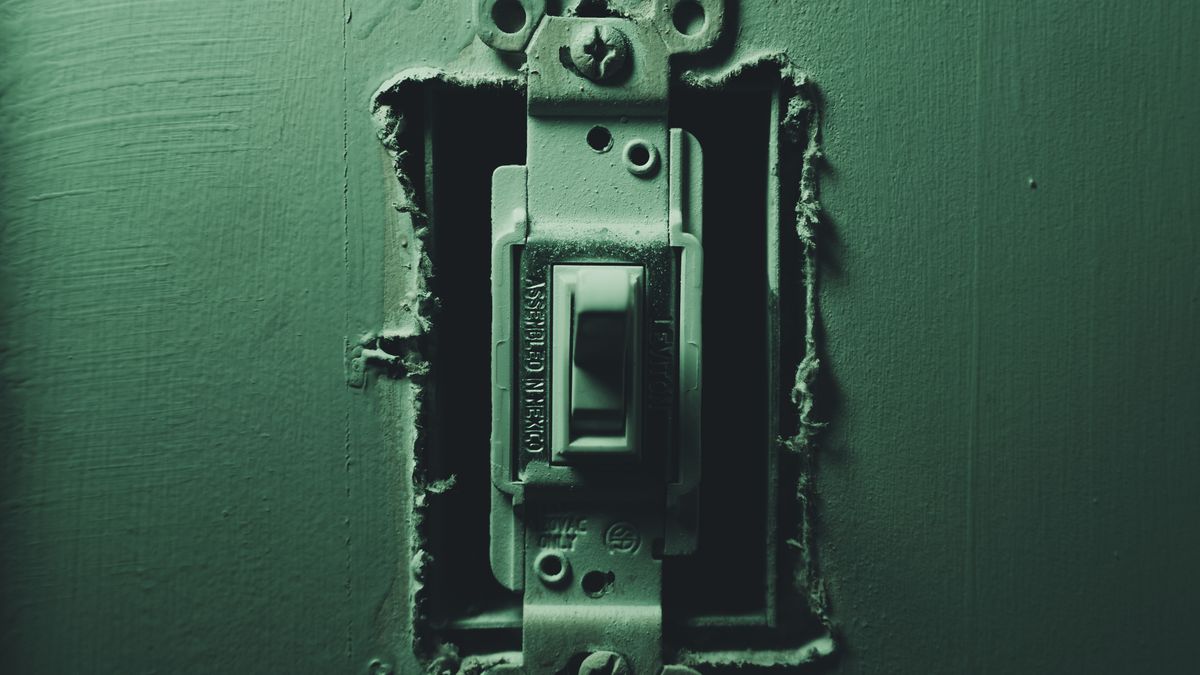
Loose wiring is the other common cause. Many switches use push-in connections, also called backstabs, where a small spring clip holds the wire instead of a screw. Over years of heating and cooling, that grip loosens. The result is the same: a buzzing light switch, a warm plate, and sometimes a light that flickers when someone walks past.
In homes with aluminum branch wiring, a buzzing light switch carries more risk. The Electrical Safety Authority's May 2025 flash notice on aluminum wiring lists warm cover plates, discoloured switches, flickering lights and arcing within switches as signs of failing aluminum terminations. It also requires every switch rated 20 amps or less on aluminum wire to be marked CO/ALR. Furthermore, if an original switch was later swapped for a copper-only device, ESA says it must be replaced with one rated for aluminum. Our guide to aluminum wiring in Hamilton explains what that means for insurance.
Why Does My Switch Buzz When It Is Off?
With the switch off, there is nothing to dim. However, the wire bringing power into the box is still live. A buzz in the off position therefore points to a loose connection on that incoming wire, or to another circuit sharing the same box. Lighted switches and some smart switches can hum faintly by design, since they draw a small current to power their electronics. Unless it is a lighted or smart model, treat a buzzing light switch in the off position as a fault.
4 Safe Checks Before You Call an Electrician
None of these checks involve removing the cover plate or touching wires. Work through them in order, and stop at the first sign of heat, crackling or a smell.
- Listen for when it happens. Note whether the buzz comes with the light on, with it off, or only at certain dimmer settings. A sound that changes with the slider points to the dimmer and bulbs. In contrast, a sound with the light off points to the wiring.
- Turn the dimmer to full brightness. If the hum fades at full and returns as you dim, it is almost certainly a dimmer and LED mismatch.
- Check the plate with the back of your hand. A dimmer may feel warm. A plain switch should feel the same as the wall. If either one is too hot to touch, or the plate is discoloured, the breaker goes off.
- Read the bulb labels. With the light off and the bulbs cool, check that every bulb on a dimmer says dimmable, and that they are the same brand and model. Then add up their wattage. A dozen pot lights on one small dimmer is a common overload.
Do not replace a buzzing light switch just to see if the noise stops. A new device on a loose or aluminum connection will buzz again, and the real fault stays hidden in the box. If the buzz comes with a dead outlet on the same circuit, our guide to an outlet not working covers that side of the problem.
The Numbers Behind a Buzzing Switch
A few figures explain why a dimmer can hum and why a plain switch never should. They also explain why the repair sometimes means a different device, not the same one.
| Item | The figure | Why it matters |
|---|---|---|
| Dimmer efficiency | About 99%, so a 600 watt load makes about 6 watts of heat | A warm dimmer is normal, a hot one is not |
| Dimmer surface limit | Lutron dimmers stay below 60°C at full rated load | A dimmer can feel very warm and still be within its limit |
| LED current peaks | Often 5 to 10 times the bulb's normal current draw | The main source of hum on older dimmers |
| Dimmer minimum load | About 40 watts on most installed phase-cut dimmers | A few low-wattage LEDs can fall short of it |
| Household lighting circuit | 15 amps at 120 volts, about 1,800 watts | The circuit can be fine while the switch is not |
| Switches on aluminum wire | Must be marked CO/ALR if rated 20 amps or less | A copper-only switch on aluminum wire is a code fault |
Ganged dimmers deserve a word as well. A dimmer is wider than a switch so it can shed heat through its metal fins. When dimmers sit side by side in one box, those fins are snapped off to make them fit. Lutron notes that removing the fins reduces the load each dimmer can handle. That is why a row of dimmers in one box often runs hotter, and hums louder, than a single one.
Why Hamilton Homes Hear It More
Hamilton's housing stock shapes which cause we find. With a buzzing light switch, the age of the house is usually the best clue.
- Pre-war homes in Durand, Kirkendall, Crown Point and the North End. Original toggle switches with tired springs are common, and some houses still have knob and tube wiring behind the plaster. Here the switch is often simply worn out, and a house with several failing switches may be due for home rewiring.
- 1960s and 1970s homes on the Mountain, in east Hamilton and in Stoney Creek. This is the aluminum branch wiring era. Any switch that buzzes or warms in these homes needs its terminations checked.
- Newer builds in Ancaster, Binbrook and Waterdown. Rooms full of LED pot lights on one dimmer, plus smart dimmers added later, make the dimmer and LED mismatch the usual cause.
- Rentals and older condos across the city. Switches get swapped by owners and tenants over the years. As a result, one box can hold mixed devices, push-in connections and a dimmer that was never sized for the lights.
What a Licensed Electrician Does About It
A proper repair of a buzzing light switch finds the cause before anything is replaced. On an Apollo service call, the work runs in this order.
- Isolate and test. The circuit is switched off and tested dead before the plate comes off.
- Inspect every connection in the box. We look for loose screws, push-in connections, heat damage and aluminum conductors, including the splices behind the switch.
- Match the device to the load. Dimmers are sized for the actual LED wattage, and a ceiling fan gets a fan speed control rather than a light dimmer.
- Remake or replace. Damaged wire is trimmed back to clean conductor, connections move to the screw terminals, and aluminum gets CO/ALR devices or approved connectors.
- Test under load. The light runs through its full dimming range, and the plate temperature is checked before we leave.
On permits, the Electrical Safety Authority says an owner living in a single family home may not need a notification to replace certain light fixtures and switches. A buzzing light switch is a symptom rather than a part swap, though. The fault is often a connection or an aluminum termination behind the device. That is why a Licensed Electrical Contractor should open it and take out any ESA notification the repair needs.
Most of these repairs take a single visit, and they are routine work for our residential electrical services team. If we find aluminum wiring or several failing devices, we put a written scope in front of you first. For a wider look at the house, our electrical safety inspection covers the panel, the grounding and the devices most likely to fail next.
Who to Call, and How Fast
With a buzzing light switch, decide by what you can see, feel and smell, not by the time of day.
| What you notice | Who to call | How soon |
|---|---|---|
| Smoke, flame or sparks | 911 | Now |
| Crackling, heat, scorch marks or a hot smell | A licensed electrician, with the breaker off | Today, at any hour |
| A plain on/off switch that buzzes | A licensed electrician | Within a few days, switch left off |
| A steady dimmer hum, plate cool or slightly warm | A licensed electrician to match the dimmer and bulbs | Book when convenient |
| A ceiling fan that hums on a dimmer | A licensed electrician to fit a fan speed control | Book soon, and keep the control at full speed or the fan off until then |
Our line is answered 24 hours a day for the urgent rows. For anything with heat or crackling, our emergency electrician in Hamilton page explains what happens after you call.
What Hamilton customers say
Zvonko addressed the problem quickly and efficiently.
Mel Giroux, Hamilton
They found lots of fire hazards and exposed wires.
Ken McDonald, Stoney Creek
Zvonko is very professional in his work and is very knowledgeable about his craft.
Maitlin Chambers, Hamilton
Frequently Asked Questions
Can a buzzing light switch cause a fire?
Yes, when the sound comes from arcing at a worn contact or a loose connection. Arcing produces heat inside the wall box, and repeated heating damages insulation until it can ignite. A faint dimmer hum with LED bulbs is different and rarely a fire risk. Crackling, heat or a hot plastic smell means the breaker should go off right away.
Why does my dimmer switch buzz with LED bulbs?
Most older dimmers were built for incandescent bulbs and cut part of each AC wave to lower the light. LED bulbs respond to each cut with a sharp burst of current, which makes parts inside the dimmer and the bulb vibrate audibly. A dimmer rated for LED loads, or bulbs listed as compatible with your dimmer, usually ends the hum.
Is it safe to keep using a light switch that buzzes?
A dimmer that hums faintly, stays only mildly warm and causes no flicker can be used until a convenient repair. A plain on/off switch that buzzes should be left off, because it should never make a sound. Any switch that crackles, feels hot or smells of hot plastic should be switched off at the breaker until an electrician has opened it.
Can I replace a buzzing light switch myself in Ontario?
The Electrical Safety Authority says an owner living in a single family home may not need a notification to replace certain switches. However, a buzzing light switch is usually a symptom of a loose connection, aluminum wiring or an overloaded dimmer, and a new switch does not fix those. A Licensed Electrical Contractor finds the cause and takes out any ESA notification needed.
Why does my ceiling fan hum when I use the wall dimmer?
The fan is probably on a light dimmer instead of a fan speed control. Dimmers are designed for lighting loads, and Leviton warns that a dimmer can damage the motor in a ceiling fan. The hum is the motor struggling with chopped power. An electrician can replace the dimmer with a speed control rated for the fan.
Does Apollo Electric fix buzzing light switches in Hamilton?
Yes. Apollo Electric Inc. diagnoses and repairs buzzing switches and dimmers across Hamilton, Stoney Creek, Ancaster, Dundas, Waterdown and Burlington. We isolate the circuit, check every connection in the box and match the dimmer to the load. Call 905-921-5487, and the line is answered 24 hours a day.
References and Resources
References
- Electrical Safety Authority, Notifications and Inspections
- Electrical Safety Authority, Flash Notice 25-18-FL, Aluminum wiring in residential installations (May 2025)
- Electrical Safety Authority, The electrician you're looking for doesn't exist: check the ECRA/ESA licence
- Electrical Safety Authority, Ontario Electrical Safety Code
- U.S. Department of Energy and Pacific Northwest National Laboratory, Dimming LEDs with Phase-Cut Dimmers: The Specifier's Process for Maximizing Success (2013, updated 2014)
- Lutron Electronics, Dimming Basics: heat dissipation, ganging and derating
- Leviton, Can a dimmer control a ceiling fan?
Helpful resources
- ESA contractor locator: check any electrician's ECRA/ESA licence before they start
- Lutron LED product selection tool: tested bulb and dimmer pairs, with performance report cards
- Leviton LED compatibility tool: match Leviton dimmers with compatible bulbs and fixtures
- Government of Canada recalls: check dimmers, smart switches and bulbs for recalls
- Apollo Electric tips and guides: every troubleshooting guide in one place
Apollo Electric Inc.
Still have a buzzing light switch after the four checks? We will find the cause and fix it properly.
Apollo Electric Inc., 83 Ferndale Ave, Hamilton, ON L8K 4L7
905-921-5487 · ECRA/ESA 7009372 · WSIB compliant · Answered 24 hours a day